On October 21, eight UVA teams traveled to North Carolina to observe the occultation of asteroid (623) Chimaera. The eight UVA teams involved eighteen students total, making this trip the largest out-of-state expedition the Occultation Group at UVA has ever had! The asteroid target, Chimaera, is a main-belt asteroid that is estimated to be approximately 44.1km in diameter, comparable to the size of Rhode Island, and making it larger than 99% of asteroids! This asteroid is particularly interesting because it is a target for the upcoming Emirates Mission to the Asteroid Belt (EMA) planned to launch in March 2028 by the UAE Space Agency. Ground-based observations are crucial to get preliminary data on Chimaera to help plan for the EMA mission.
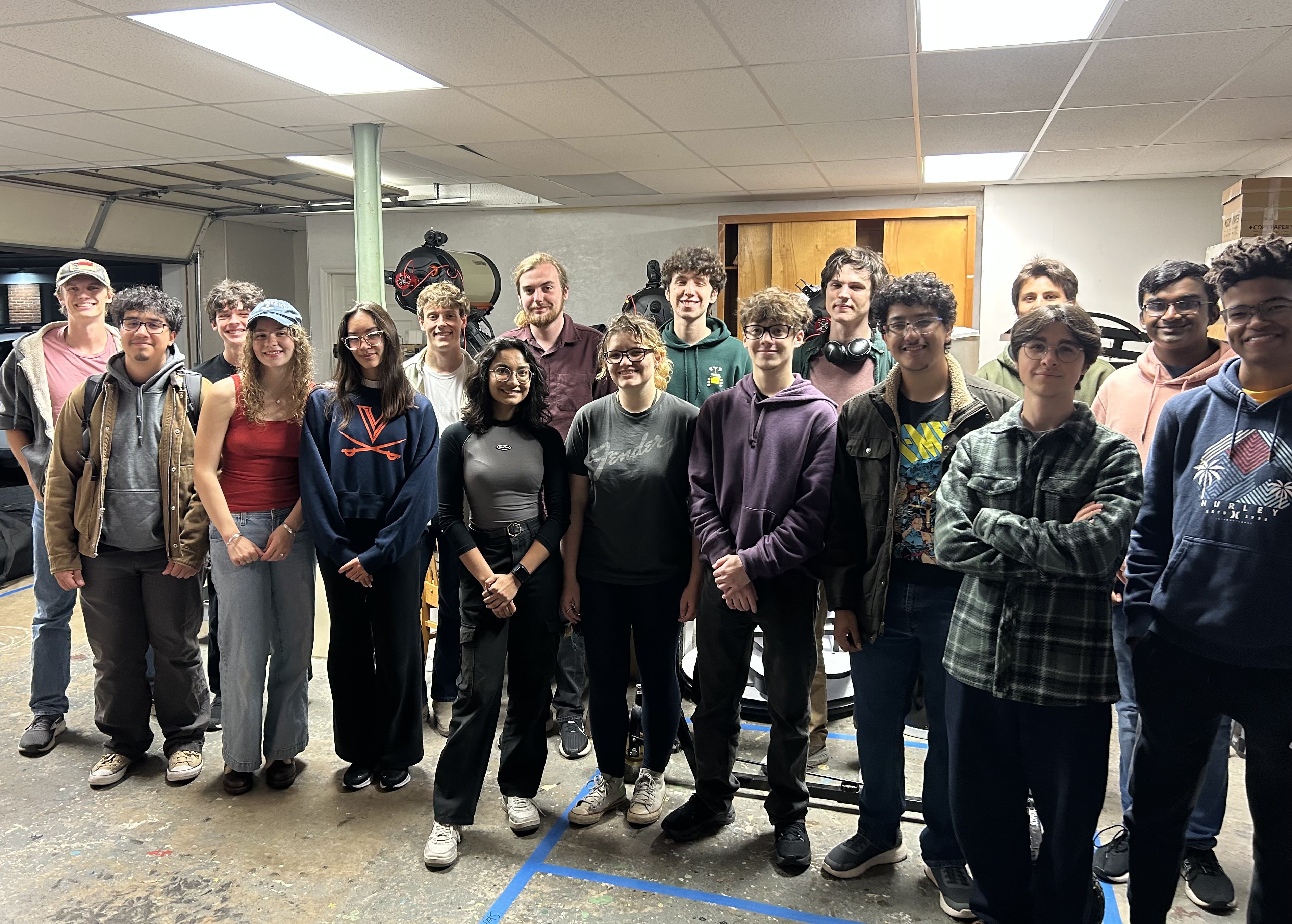
UVA team before departing for North Carolina. From left: Phillip Oakey, Diego Gomez, John DiPasquale, Georgia Clickner, Lauren Daszynski, James Beck, Keya Garg, Charles Dorsey, Nadara Hudson, Stephen Welch, Tristan Howdyshell, Colin Surovell, Andrés Salinas, Andrey Moore, Mark Chernov, Kaushik Elavarasu, Altony Foote. Credit: Phillip Oakey
The eight UVA teams worked along with nine other observing teams from across the United States. The UVA teams set up eight telescopes total in the area surrounding Charlotte, North Carolina. In total, there were eighteen telescopes set up across the United States to observe Chimaera.
The UVA teams left Grounds on Monday, October 20 around 8:00 pm local time to set up in North Carolina. Set-up went smoothly for all eight UVA telescopes and the sky had minimal clouds in sight. Chimaera was so bright that it could’ve been mistaken as a star through the telescope! All UVA telescopes started capturing data at 07:13:40 UTC (03:13:40 local). Seven out of eight UVA telescopes watched as the asteroid approached and partially occulted the target star, causing a 48% drop in the star’s brightness along the central line of the asteroid’s path. One of the UVA telescopes didn’t observe the occultation, but these negative results are very crucial in understanding the boundaries of the asteroid’s size.
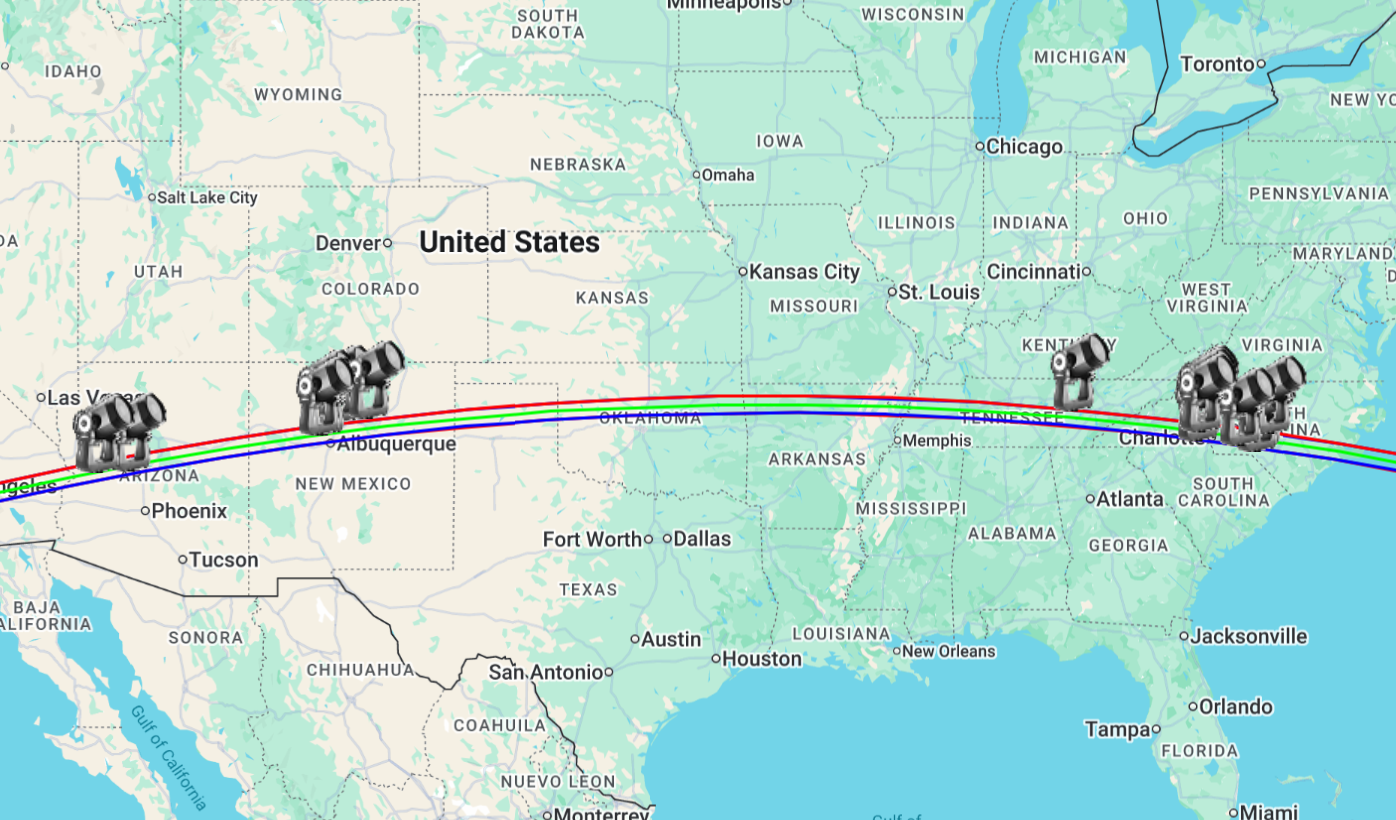
Map of all telescopes across the U.S. that were on-field for the occultation of (623) Chimaera.
As a whole, all but two telescopes across the United States successfully captured data. Out of sixteen successful data captures fourteen were positive and two were negative. The two negatives were located at the upper and lower boundaries of the asteroid; these two negatives will help us understand the size of Chimaera during data analysis. Unfortunately due to technical issues one telescope observed the initial dimming of the star as Chimaera began occulting the target star, but could not observe the reappearance of the star at the end of the occultation. However, this expedition was still overall a great accomplishment. After the successful mission, the UVA teams all went to Waffle House at the prime time of 5:00 am to celebrate with waffles and bacon!

From left: Charles Dorsey, John DiPasquale, Andrés Salinas, Kaushik Elavarasu, Nadara Hudson at a post event meal. Credit: Nadara Hudson
However, the expedition was not over yet. As we waited for our food, we already started working on preliminary data analysis. These preliminary flux vs. time lightcurves taken by each UVA telescope all turned out beautifully. The following image depicts a lightcurve of Chimaera gathered by one one of the UVA telescopes during the expedition.
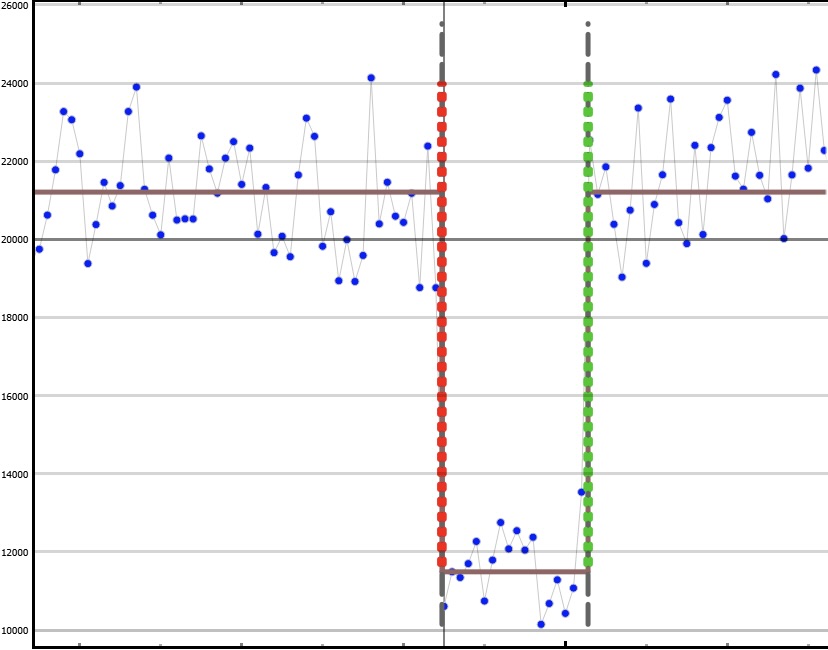
Sample light curve of the 10-21-2025 occultation by (623) Chimaera from a selected station. Further details redacted until the publication of results.
Using all the lightcurves captured from each telescope, a skyplane plot can be made to visually show the size and shape of the asteroid. This plot depicts each of the telescopes’ view or chord as a straight line on the plot; this line will disappear at the time the respective telescope observed the start of the occultation and reappears when the occultation ends. With multiple cords put together, this plot essentially draws a picture of what the asteroid’s 2D shadow looks like. Skyplane plots can show Chimaera’s topographical features and any special characteristics that researchers might want to focus on in the future.
Data analysis is still on-going, so many things have yet to be explored. We plan to release updates once analysis is complete, so make sure to keep an eye out! It is hoped that these ground-based observations for Chimaera assist in the preliminary analysis of the asteroid, preparing for when we get the chance to see Chimaera through the eyes of the EMA Explorer in 2028!
Lauren Daszynski
Observer, Class of 2029