On January 13, 2026, twelve students from the University of Virginia (UVA), around seventy observers working with the Sharjah Academy for Astronomy, Space Sciences and Technology (SAASST), and several members of the Southwest Research Institute (SwRI) started recording data for the occultation of asteroid (269) Justitia in the United Arab Emirates, one of the Occultation Group’s furthest expeditions yet.
However, this expedition didn’t start here—for many of us, it began many months prior: planning logistics for a trip to a country halfway around the world, reviewing weather forecasts, collecting funds to support the trip, and selecting the students who would attend. A week prior, while many Hoos were relaxing during their winter break, members of the Occultation Group left their homes, with telescopes in tow, and ventured to the Emirates!
This expedition was a collaboration among SwRI, SAAST, and the UAE Space Agency (UAESA), which plans to launch the Emirates Mission to the Asteroid Belt (EMA) in March 2028. The mission is set to visit seven main-belt asteroids, orbiting the final target and deploying a lander on its surface. That final asteroid is named (269) Justitia, and is one of the reddest asteroids in the main belt between Mars and Jupiter. This leads some to believe it is a captured body from the outermost regions of the Solar System, where such red planetesimals are common.
As this asteroid would be part of the Emirates Mission to the Asteroid Belt, its orbit had to be mapped well—any incorrect prediction could alter the trajectory of the probe. Additionally, oddities displayed in a previous occultation hinted at a possibility of a satellite—if there was one, there was a good chance it would also occult the star on January 13th.
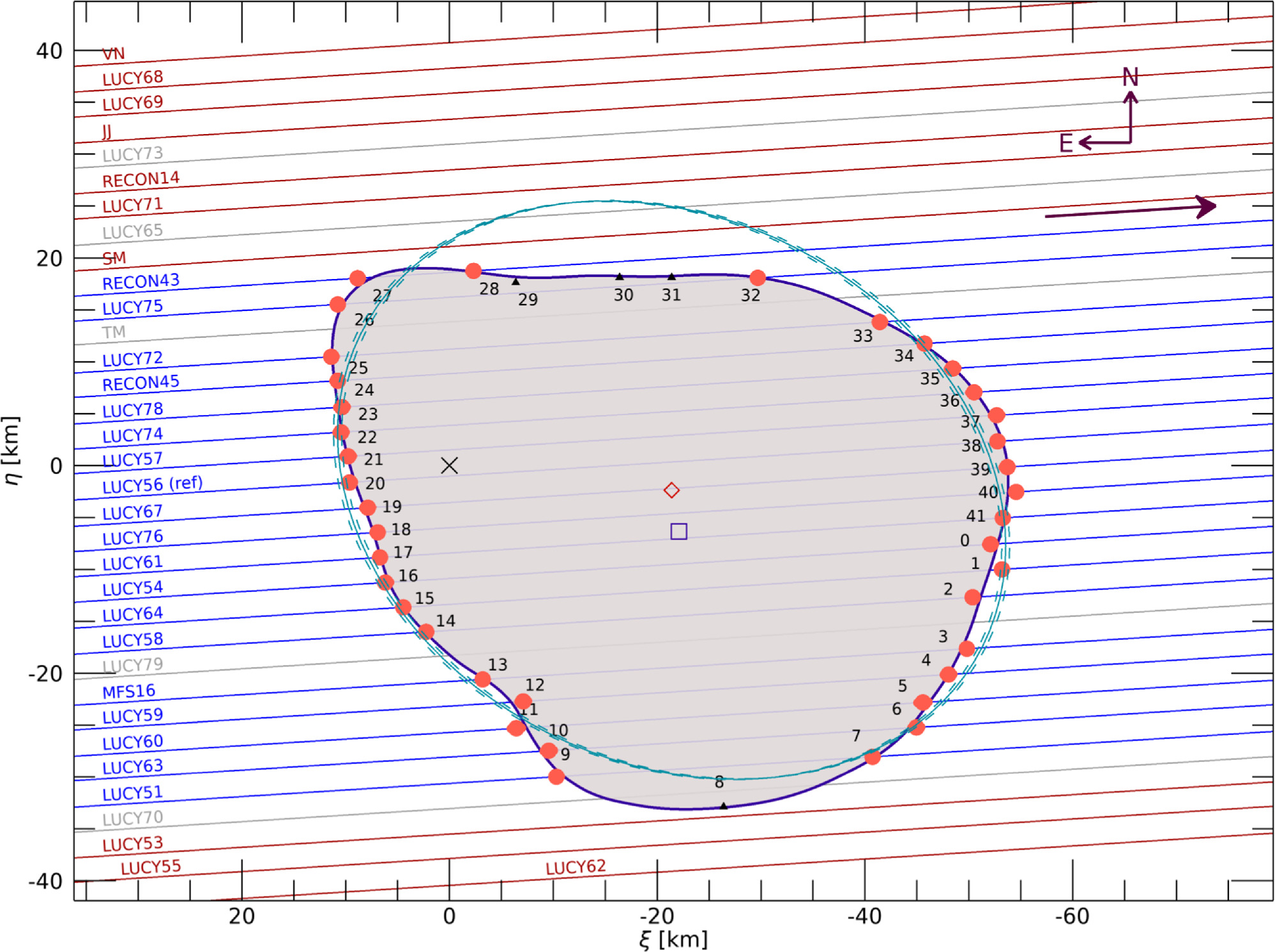
Previous asteroid profile of (269) Justitia from the August 31, 2023 occultation campaign. Credit: Marc W. Buie
On the seventh, we landed in Dubai, and nine out of the twelve UVA students met at the airport. Four of us went north to stay in Ras Al Khaimah with our Vice President Keya Garg’s family, while the rest of us drove south with the help of local member Vasilisa’s drivers, Irene and Rona (thank you!). Driving out of the airport was a surreal experience—the first things I noticed were that all the signs were in Arabic and English, and the scale of everything around us immediately felt unreal. As we headed closer to the city, the skyline came into view, and I could make out the spire of the tallest building in the world—the Burj Khalifa!
Driving to our residences, three of us stayed at a hotel, while Mark Chernov and I continued to an apartment in downtown Dubai, where we would wait for Matthew Walls and Charles Dorsey to join us later that week. Our balcony on the 18th floor gave us our first chance of relaxing and enjoying the beautiful view of the Palm across the water.
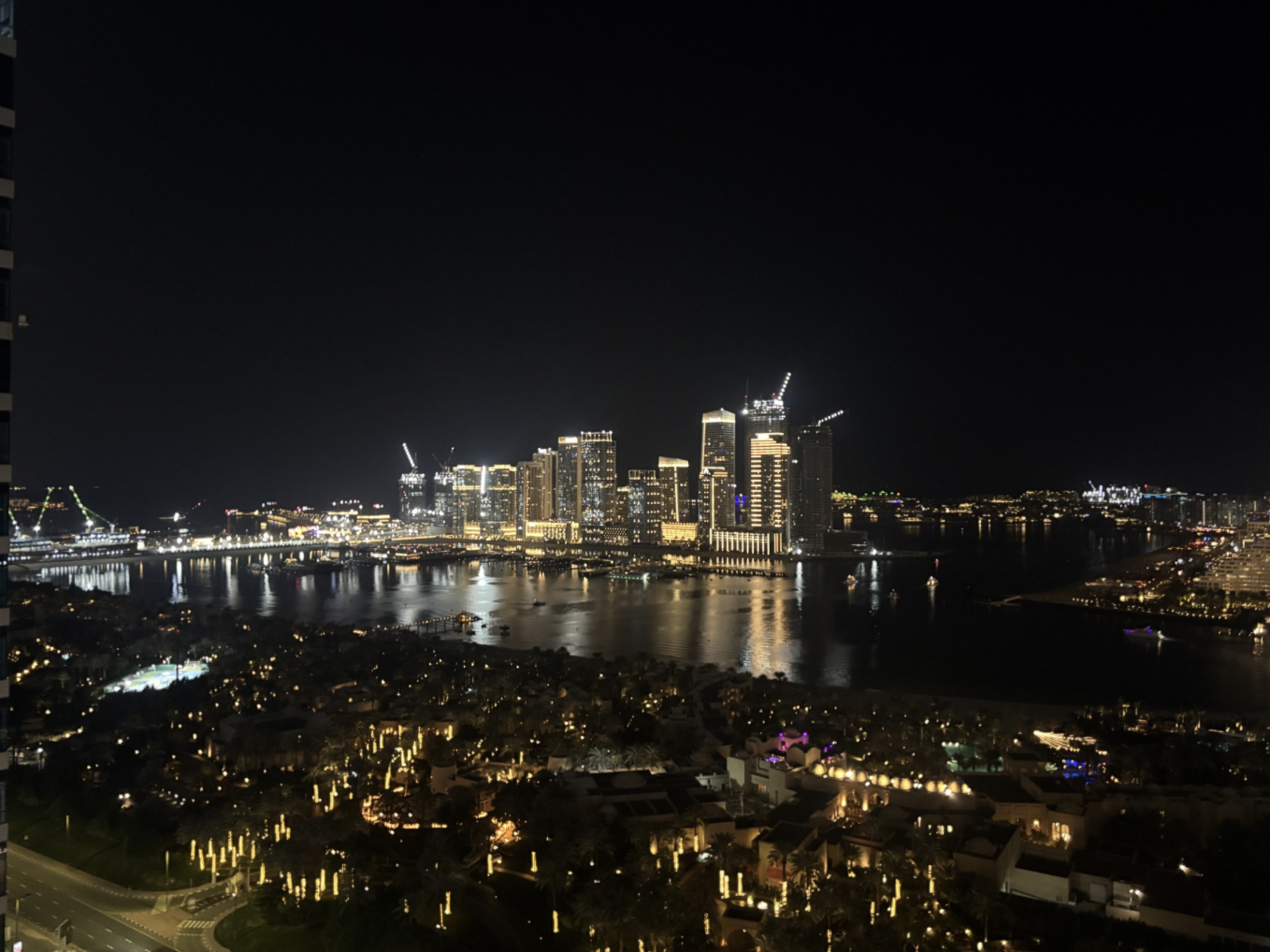
View of the Palm Jumeirah skyline from the apartment. Credit: John DiPasquale
On our first day, we drove through downtown to get to the Sharjah Academy. Instead of the typical building layout I expected, the premises acted as a solar system with a large golden-domed central building representing the sun and a large lawn encompassing it with painted spheres acting as the Solar System’s planets “orbiting” it.
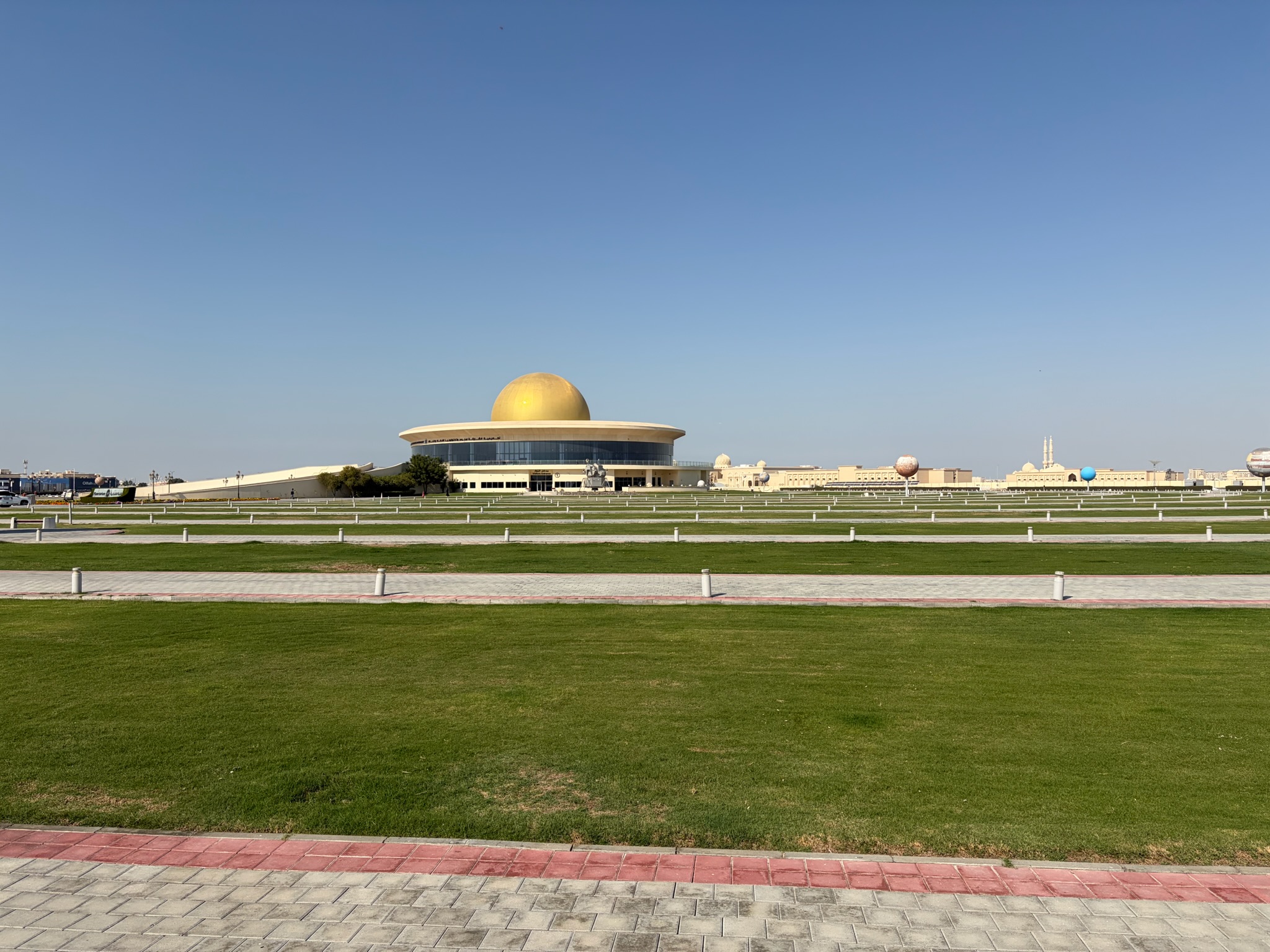
Sharjah Academy for Astronomy, Space Sciences and Technology, designed as a scale Solar System with the central building representing the Sun and surrounding spheres representing planets. Credit: Altony Foote
Outside of the “Solar System”, in a building behind a futuristic set of doors that looked like they stepped out of Star Wars, were the team’s 34 telescopes—thirty CPC1100 systems from SwRI and four AM5 systems from UVA—recently assembled thanks to a generous grant from the Jefferson Trust. With the systems fresh off delivery, we had to get to work downloading, updating, and configuring the right software on each computer, along with ensuring everything was in place. Many of the telescopes SwRI brought with them were last deployed in Wichita, Kansas as part of the Occultation Group’s recent expedition this summer to observe (59980) Moza, another target of the EMA.
Here we were also able to meet the leads from the UAE behind the trip, Hoor al-Mazmi and Anoud al-Zaabi, along with the members of SwRI that had organized this mission, Marc Buie and Brian Keeney (who is a UVA alumnus!).
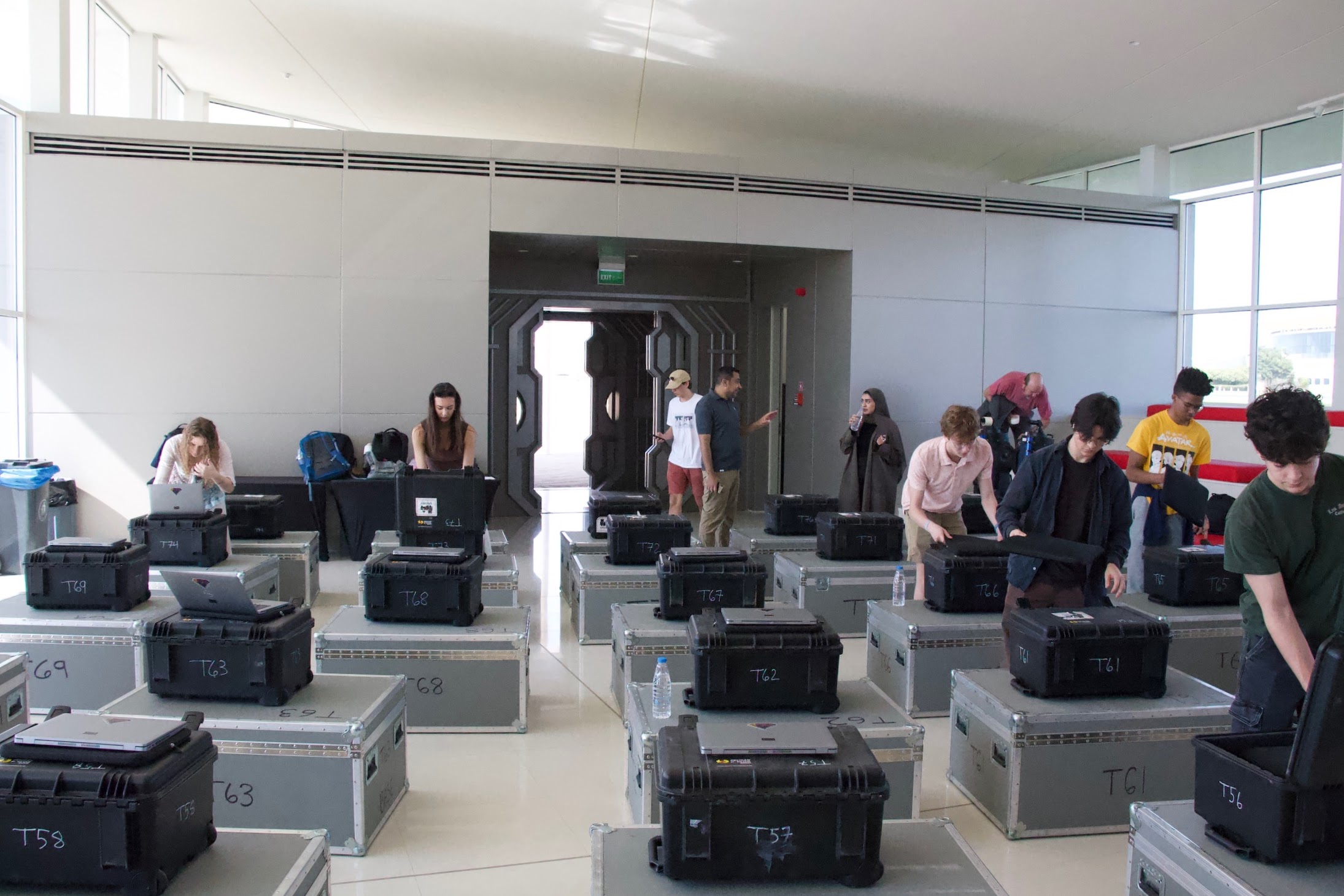
Occultation Group members configuring and testing telescope software at SAASST prior to deployment. Credit: Phillip Oakey
It had been decided that the UVA occultists would be split—the four members of the executive team would be spread out among the local observers, while the remaining eight members were split into four teams of two that would handle the AM5 systems.
All four of the UVA teams were set near the expected bounds of the asteroid, with the apartment team being in the south and the other two teams being in the north. My partner would be first-year student Matthew Walls, meaning that we would share the responsibility of assembling a telescope and recording the occultation alone in the desert.
After completing business for the day, we headed to this fantastic, authentic restaurant that gave me a taste of the local cuisine—Hardee’s! Although it was a taste of home, it was actually the first time trying it for the majority of us (would recommend!).
Naturally, after enjoying the comforts of American fast food abroad, we threw ourselves straight into dune bashing! Off-road, high-speed driving across the Emirati dunes, twisting and turning along the shifting terrain. The ups and downs made my stomach do somersaults. After bashing, we came together for a buffet featuring a show by a fire dancer! The dinner was our genuine first taste of food here, and we had the option of lamb, beef, dumplings, fried rice, and more. The show impressed us throughout the meal, and several undomesticated cats joined us for the event—whether to enjoy the show or steal our food, we will never know.
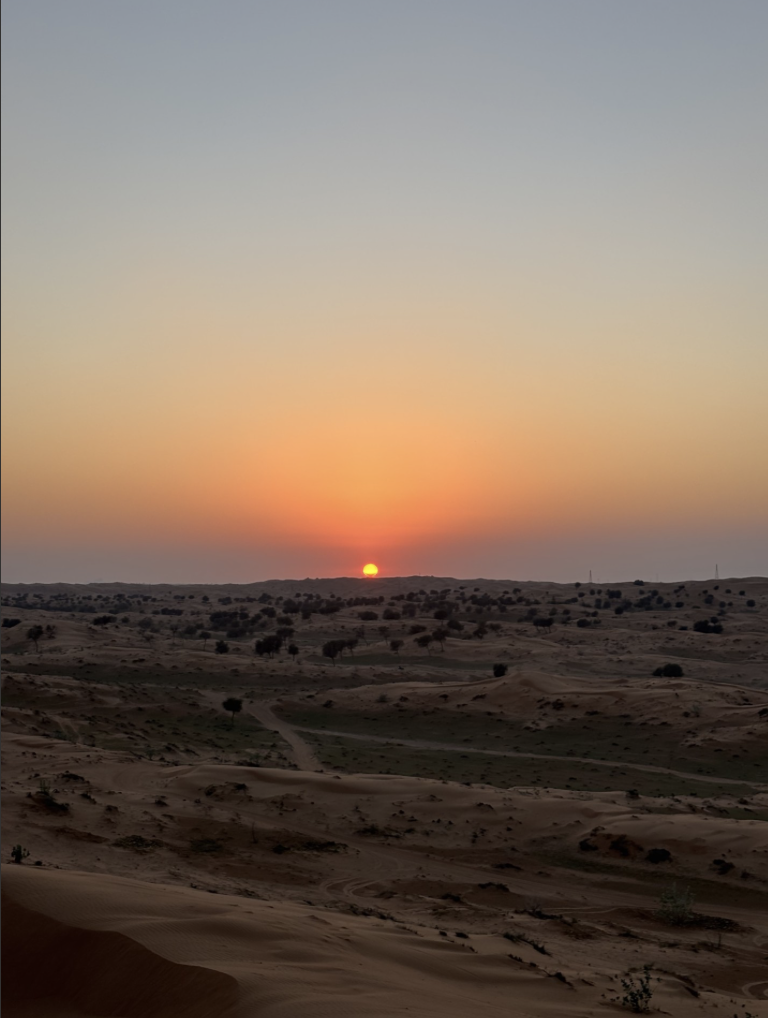
View of the sunset over the dunes in the Arabian Desert. Credit: John DiPasquale
That night, as Teddy put it, we were able to “sleep in” until 4:30 am. Call time was at 6 am in Sharjah, and both Matthew and Vasilisa would join us by morning. Here we met all the local members of the expedition, ranging from people who have never touched a telescope before to others who were studying astrophysics. I personally had the chance to briefly meet several members, one of whom mentioned his interest in astrophotography and his own AM3 telescope system that he used.
Being in an entirely new country also allowed me to further explore one of my interests—bird watching! Luckily, I had packed my personal pair of binoculars, so I was prepared for any feathered friend that came my way. Although right next to the desert, Sharjah still had a wide variety of birds, including many colorful ones such as the Superb Sterling (as seen below), which was a frequent visitor to the Academy. Its vibrant blue back, combined with its fiery orange belly, drew my attention to it each time it visited.
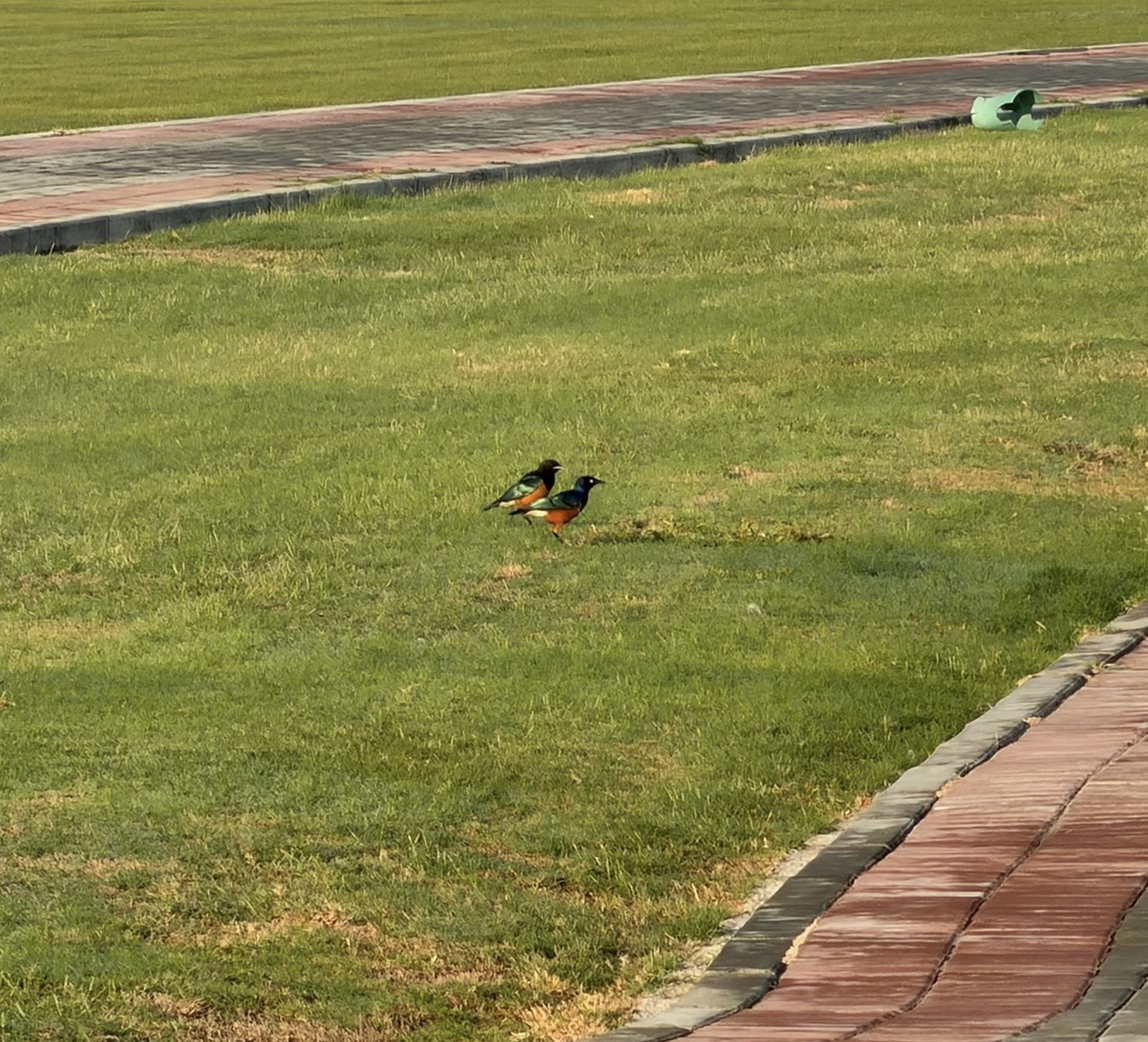
Two Superb Starlings observed together on the Academy grounds in Sharjah. Credit: Matthew Walls
The following day was our first 1:30 am wakeup for our 3:00 am meetup. As we were nine hours ahead, our bodies felt like we were falling asleep at 9:00 am and waking up at 4:30 pm. We set up telescopes for the first time outside, with the trainers walking around to anyone who needed help, while the UVA teams assembled telescopes on our own, spending a few hours fully assembling and disassembling our systems, troubleshooting hardware, collimating our optics, and debugging software issues.
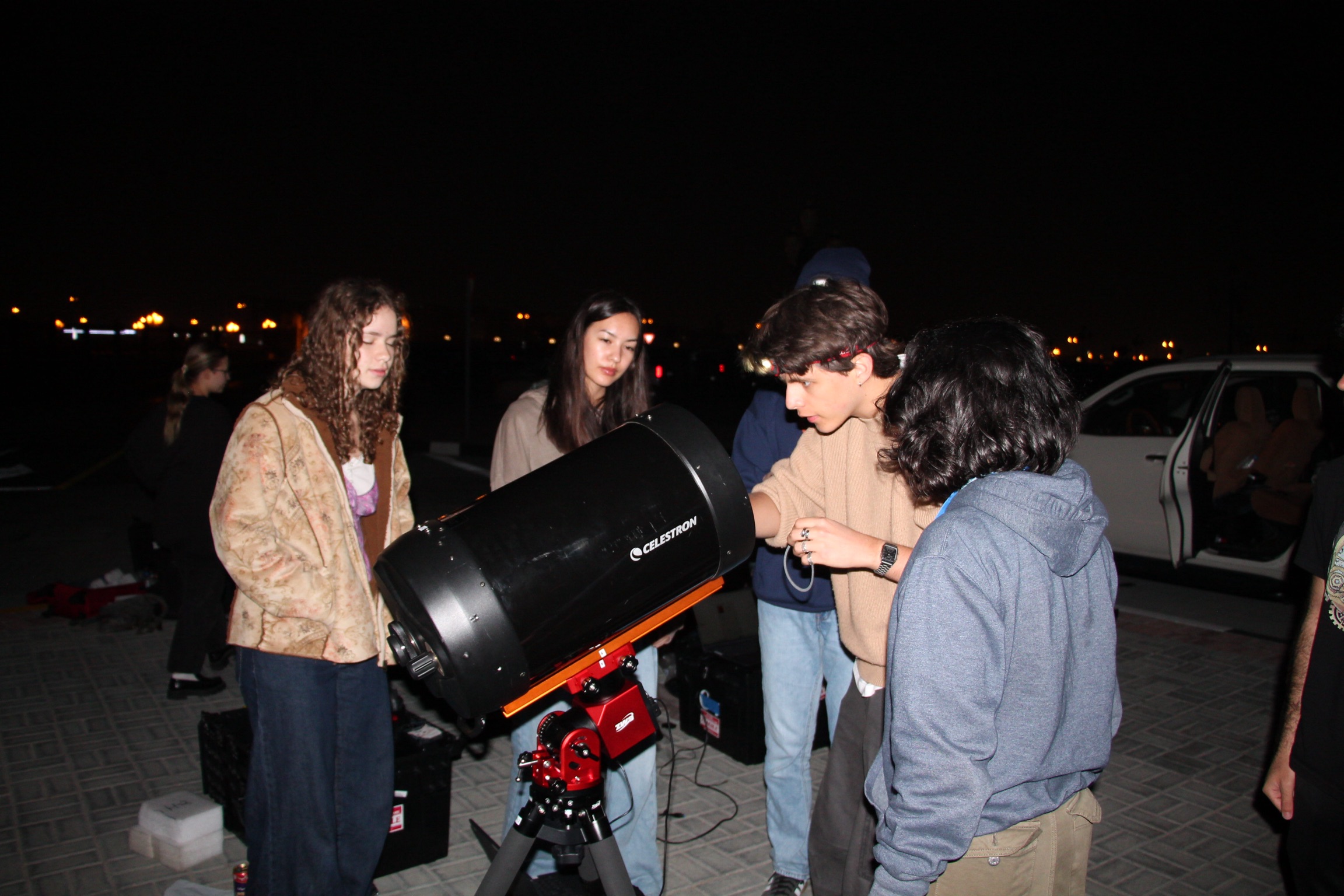
From left: Georgia Clickner, Lauren Daszynski, Andrey Moore, and Keya Garg assembling an AM5 telescope. Credit: Phillip Oakey
After a few hours spent discussing logistics, log sheets to track data, and more, the UVA team travelled to the coast, where we finally had our own beach episode! Charles had finally arrived from London and met us there, giving the whole group their first chance to relax together. Back at the residence, Mark cooked his signature dish, a delicious salmon (or as he would say, sal-min), that the team staying at the apartment desperately needed.
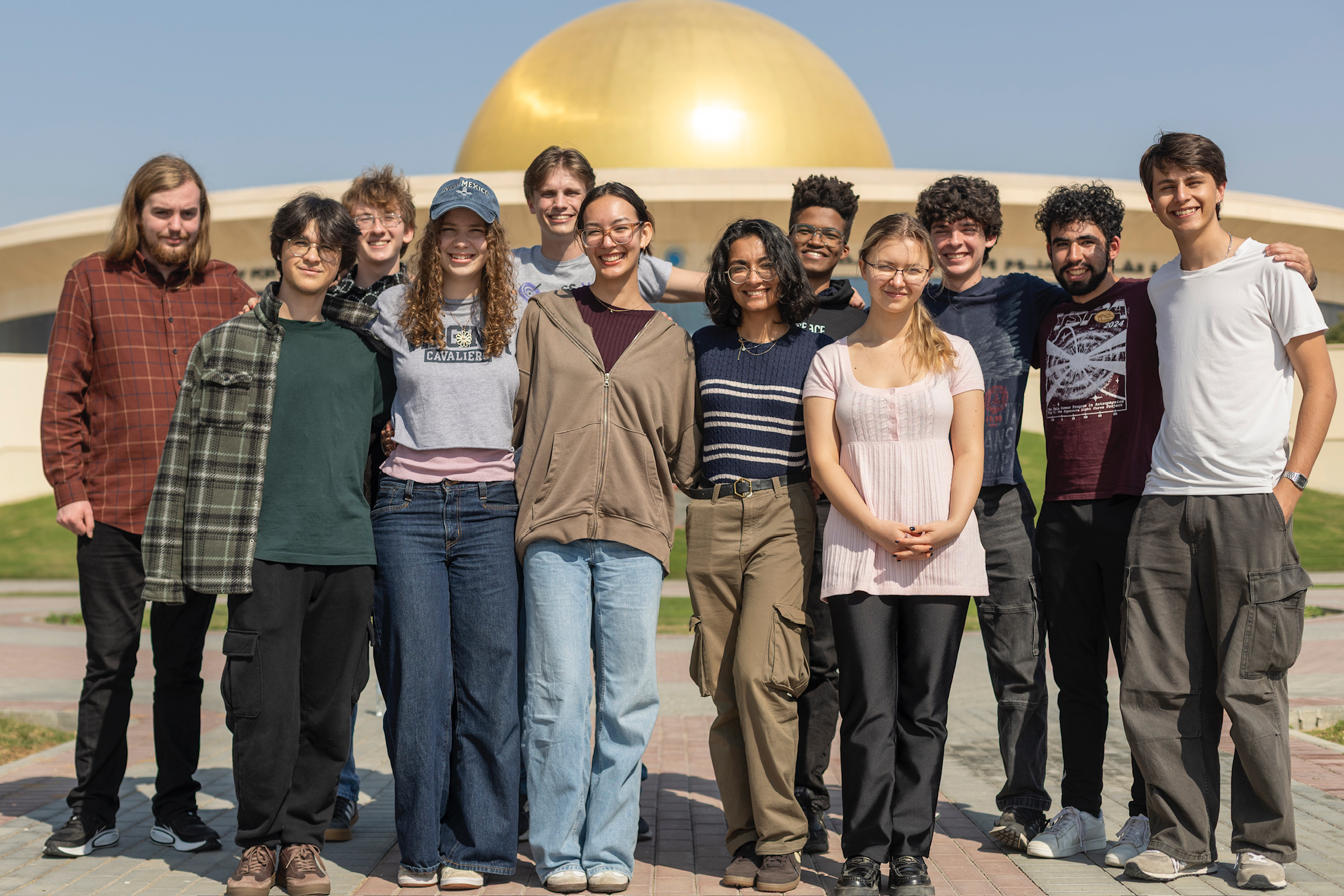
The team from UVA standing in front of the Sharjah Academy for Astronomy, Space Sciences, and Technology. From left to right: (back) Charles Dorsey, Casey York, Teddy Oakey, Altony Foote, John DiPasquale, Matthew Walls, Andrey Moore, (front) Mark Chernov, Georgia Clickner, Lauren Dasynski, Keya Garg, Vasilisa Sergienko.
The goal of the next day was to meet at 3:00 am and be fully assembled and on the star field by 4:00 am, and a majority of the teams did just that! I was really impressed with the whole group, as many of the people were completely new to the systems and managed to get a full grasp on them in just a few days. Discussion of choosing sites followed, and the teams hit the road to locate the site they would be using on event night.
Charles Dorsey, Mark Chernov, Matthew Walls, and I rode together and, after a few sub-parspots, found our sites. Matthew and my site was a large dirt field right next to a farm (with the fresh smell of manure, yum!). Mark and Charles had a bit worse luck and ended up having to go with a clearing in the middle of the desert that had a long, 20-minute off-road adventure to get to.
On our way to the sites, we had the chance to see a bunch of local wildlife, including a lot of camels just chilling around and a few small herds of sand gazelles.
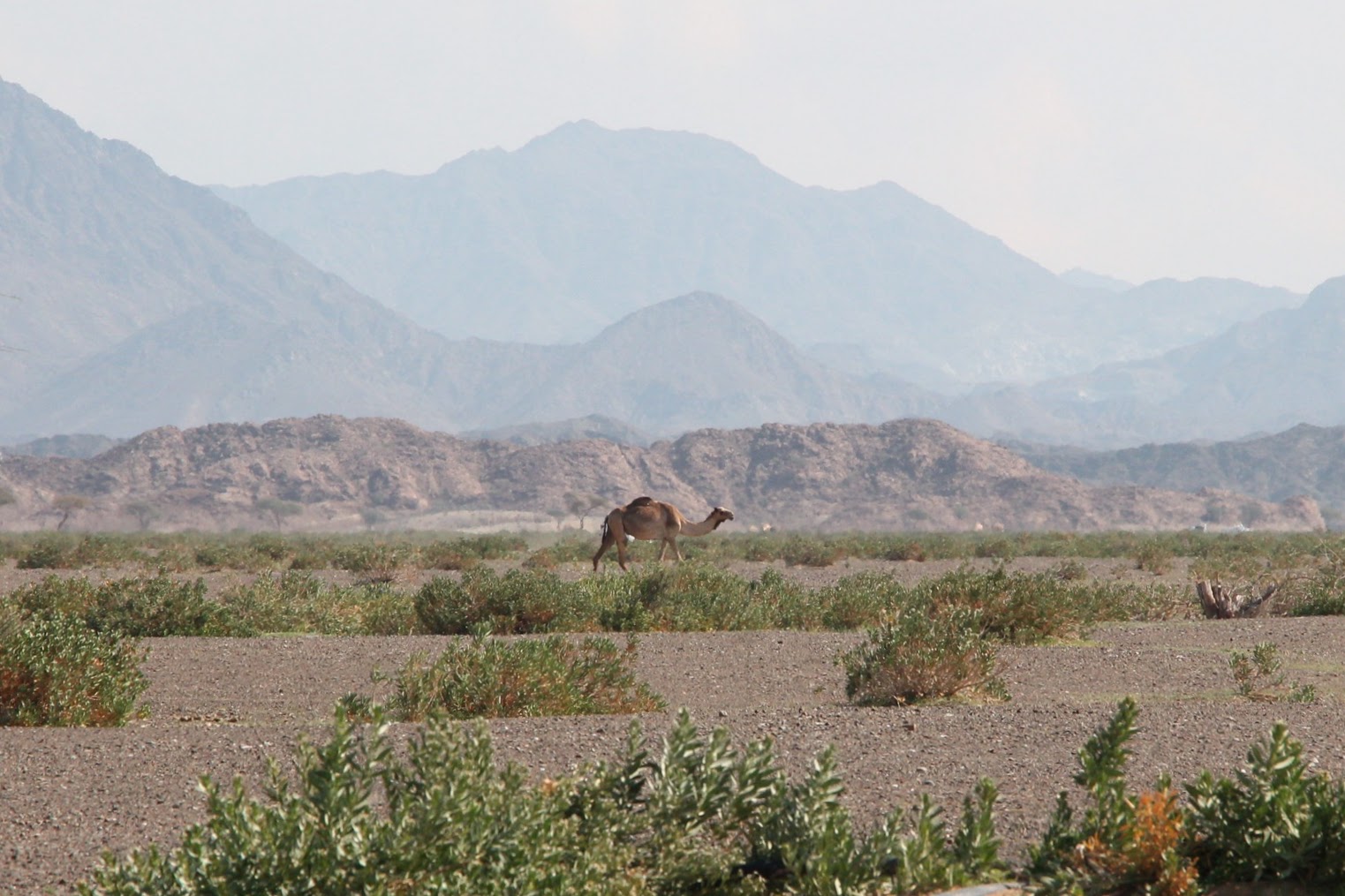
A camel strolling across the desert. Credit: Phillip Oakey
Dress rehearsal occurred the following day, which is when, on the day before the occultation, we do a rehearsal of exactly what we would be doing during the event. We got to the site a few hours early, set up, and recorded data at the time it would be at tomorrow. Matthew and I had ample time before the event, so we were able to look at some constellations in the night sky. The sky was looking pretty hazy when we got to the site, which gave us some worries for tomorrow, but it managed to clear up around half an hour out.
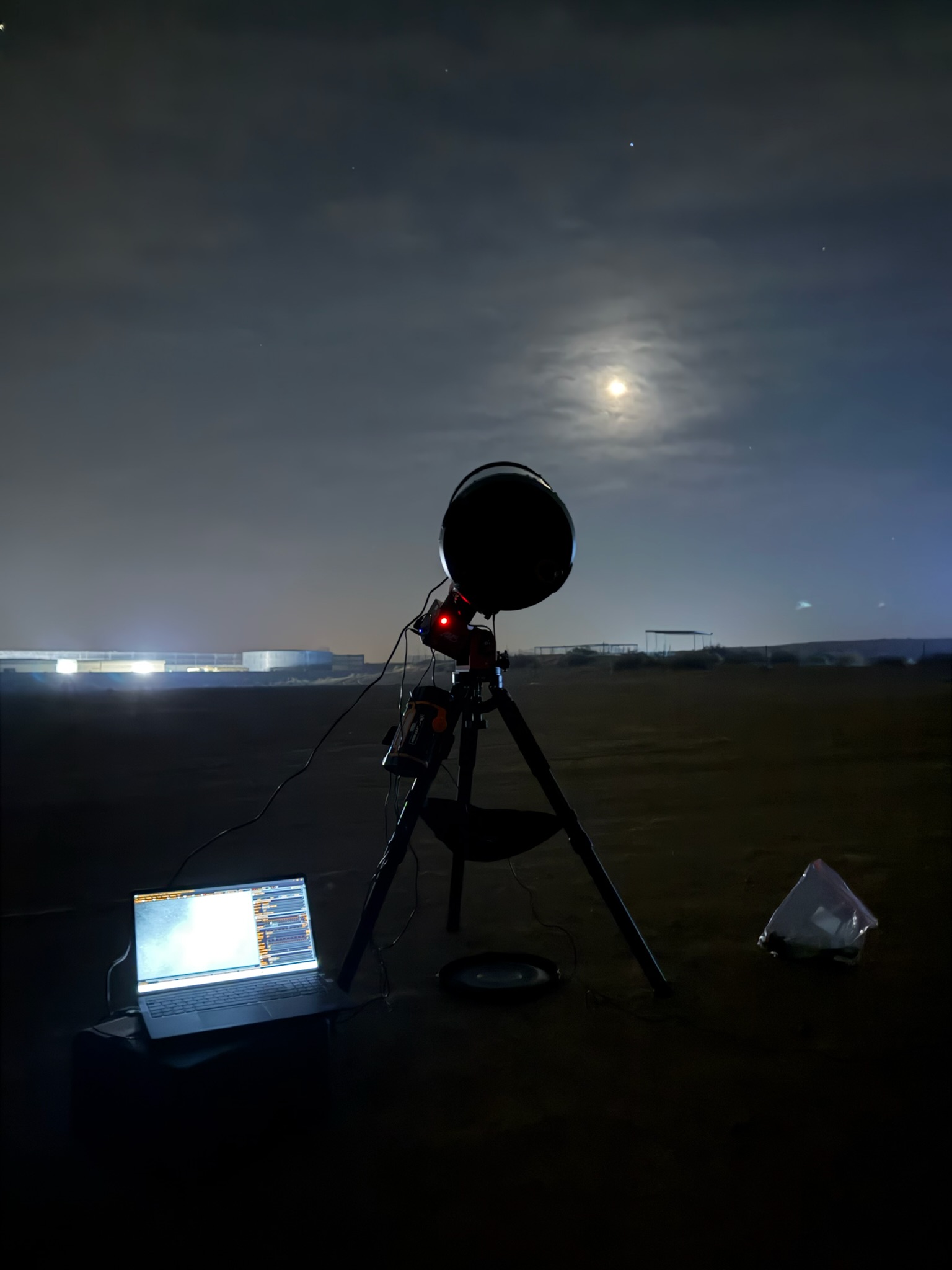
An AM5 system fully assembled during dress rehearsal. Credit: Matthew Walls
Coming back to Sharjah, I learned that the entire group had around a 75% success rate! Hearing that was crazy and really showed me how well and organized SwRI runs things, taking inexperienced observers to successful ones in just a few training sessions.
As it was our last chance to do touristy things, a bunch of us headed over to the Dubai Mall to hit a bunch of the things on our travel list—see the Burj Khalifa up close, get gifts for friends at home, and of course, eat some authentic Dubai chocolate. We headed back home to make sure we got an early rest for the event tomorrow—we were all so excited for the big day!
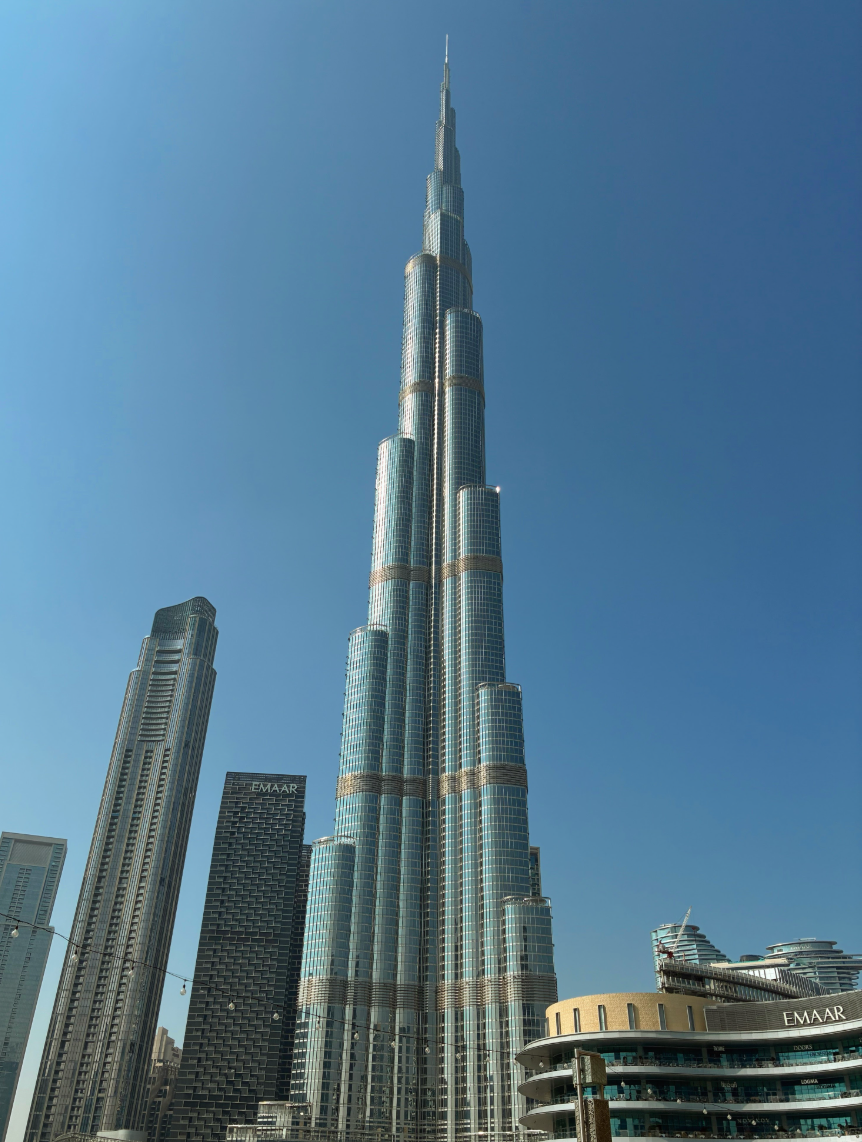
View of the Burj Khalifa from downtown Dubai. Credit: Georgia Clickner
Event day! Months of planning, weeks of assembling telescopes, days of training astronomers, all led up to this. The teams left early, with Matthew and I arriving on site by 2:00 am, and Mark and Charles arriving before 2:30. Since Matthew and I were one of the southernmost chords, we were expecting a constraining negative; however, we saw the star blink out! Three out of the four teams saw a positive, while Georgia and Vasilisa’s team saw a constraining negative (i.e. the star did not blink out), which is extremely valuable data, as it tells us precisely where the edge of the asteroid is located. The mission was a success! We look forward to sharing the final profile when it has been peer-reviewed and published, but currently it is under scientific embargo.
The team enjoyed their final day in the UAE, attending a fabulous lunch at a tea house hosted by Hoor al-Mazmi. The group packed up and, taking one last walk around, enjoyed a final sunset. We all made our way back to the airport, taking off with some of us going through Frankfurt, others through London, all to get back to UVA in time for the fourth day of classes.
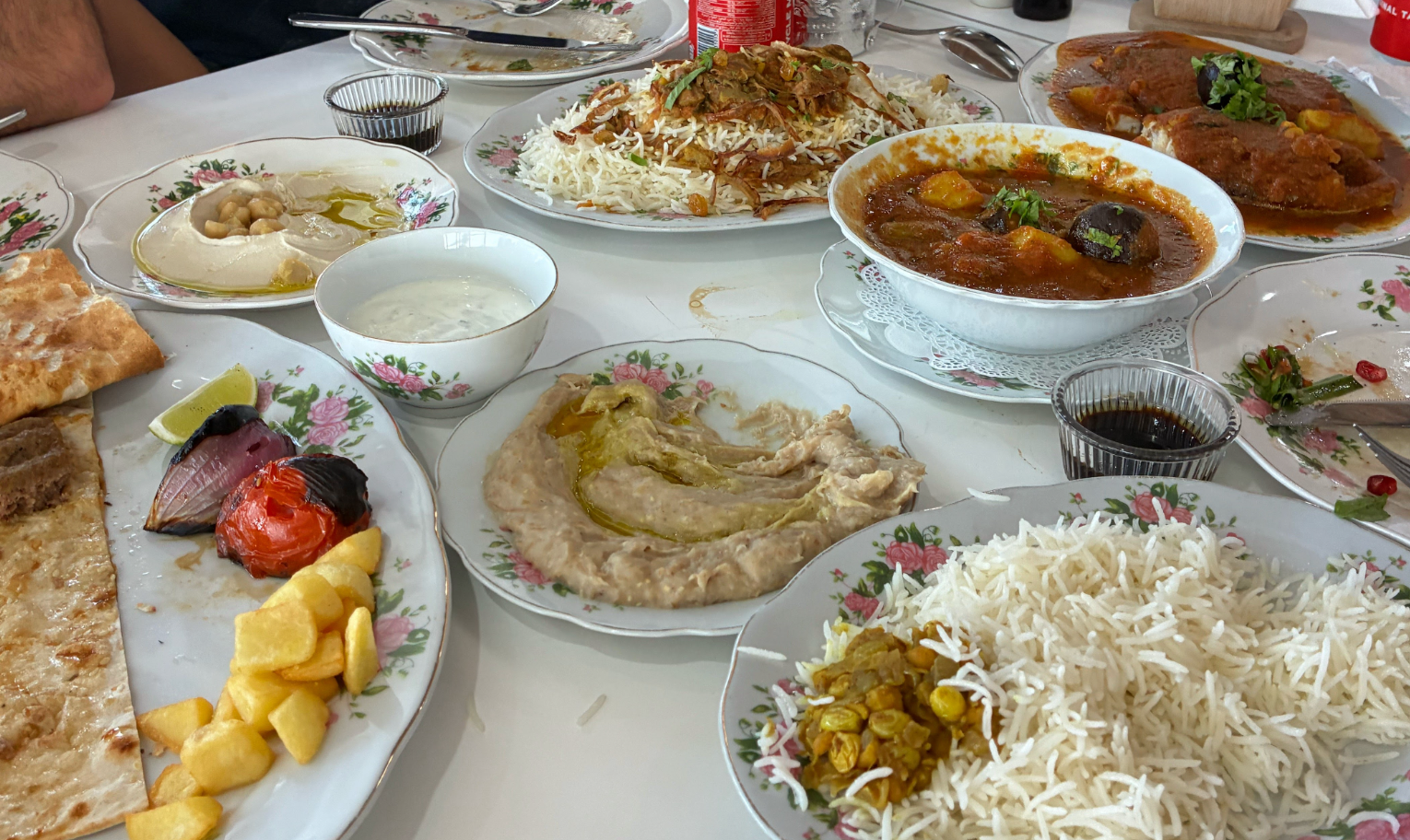
Delicious meal selection at the Arabian Tea House, Sharjah, UAE. Credit: Georgia Clickner
It was such an amazing trip, and it would not have happened without the fantastic people involved. We would like to share our appreciation towards the Parent’s Program, the Jefferson Trust, the UVA Student Council, and the College of Arts and Sciences Small Research and Travel Grant program for their dedicated support of our group and our mission to pursue asteroid science all across the world.
John DiPasquale
Observer, Class of 2028