 The Occultation Group at UVA
On March 12th, 2026, amidst feathery flurries of snow, eight members of the Occultation Group at the University of Virginia boarded a plane bound for Sydney, Australia.
Just weeks before, we’d been contacted by researchers at the Instituto Astrofísica de Andalucía on behalf of the European Space Agency (ESA), asking us to collect data on Kallichore, a small, irregular moon of the giant planet Jupiter. Kallichore had previously only been observed through one other occultation and minimal astrometry. Huge orbital uncertainties and an essentially unknown profile made Kallichore somewhat of a mystery.
Two years ago, the ESA launched a probe named the Jupiter Icy Moons Explorer (JUICE), which is set to visit three of Jupiter’s largest moons in the 2030s. The mission will study the potential subsurface oceans in these worlds, as well as investigate the possibility of habitability underwater. Interestingly, there is a possibility to redirect the JUICE spacecraft to conduct a flyby of Kallichore, but the ESA needs to know the precise location of Kallichore with much greater accuracy—which is where the Occultation Group steps in! Our observations will help refine Kallichore’s “astrometry”, as it is known, to within the desired range of the ESA for a JUICE flyby.
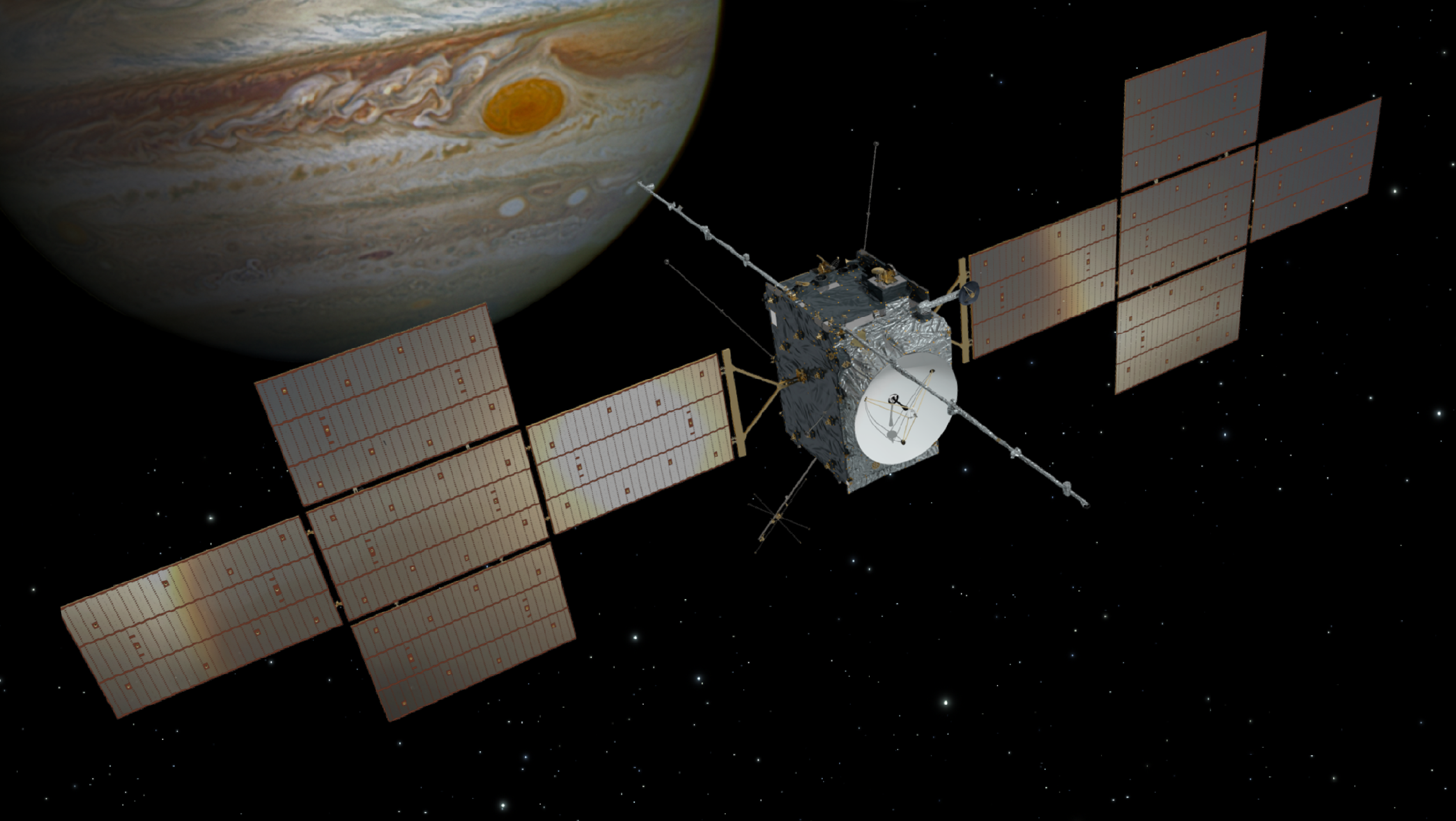
Artist’s impression of the Jupiter Icy Moons Explorer. Credit: The European Space Agency
Kallichore is especially interesting because it is part of the Carme group, a family of Jovian moons which are believed to be remnants of an object which originated from somewhere out past Neptune. Due to limited interactions with other bodies, the geologic and chemical conditions on Kallichore likely resemble those of the early outer Solar System. Studying this moon would offer valuable insights into these conditions at a relatively nearby location, possibly giving us hints as to how organic molecules made their way to our own planet.
With this background in mind, we flew across the Pacific, traveling with four of our own telescopes. We would be collaborating with other teams traveling internationally, as well as domestic observers. The total efforts for this campaign consisted of fifteen telescopes. After over thirty hours of travel, we landed in Sydney. We had to wait several hours to check into our rooms, so after securing our luggage and rental cars, we made a beeline to the beach. In the comfort of a quiet cove, all our stress and aches seemed to wash off into the azure waters. That evening, we all worked together to cook a delicious meal—homemade chicken and noodles! This was the first of many “family dinners” we would have during our trip.
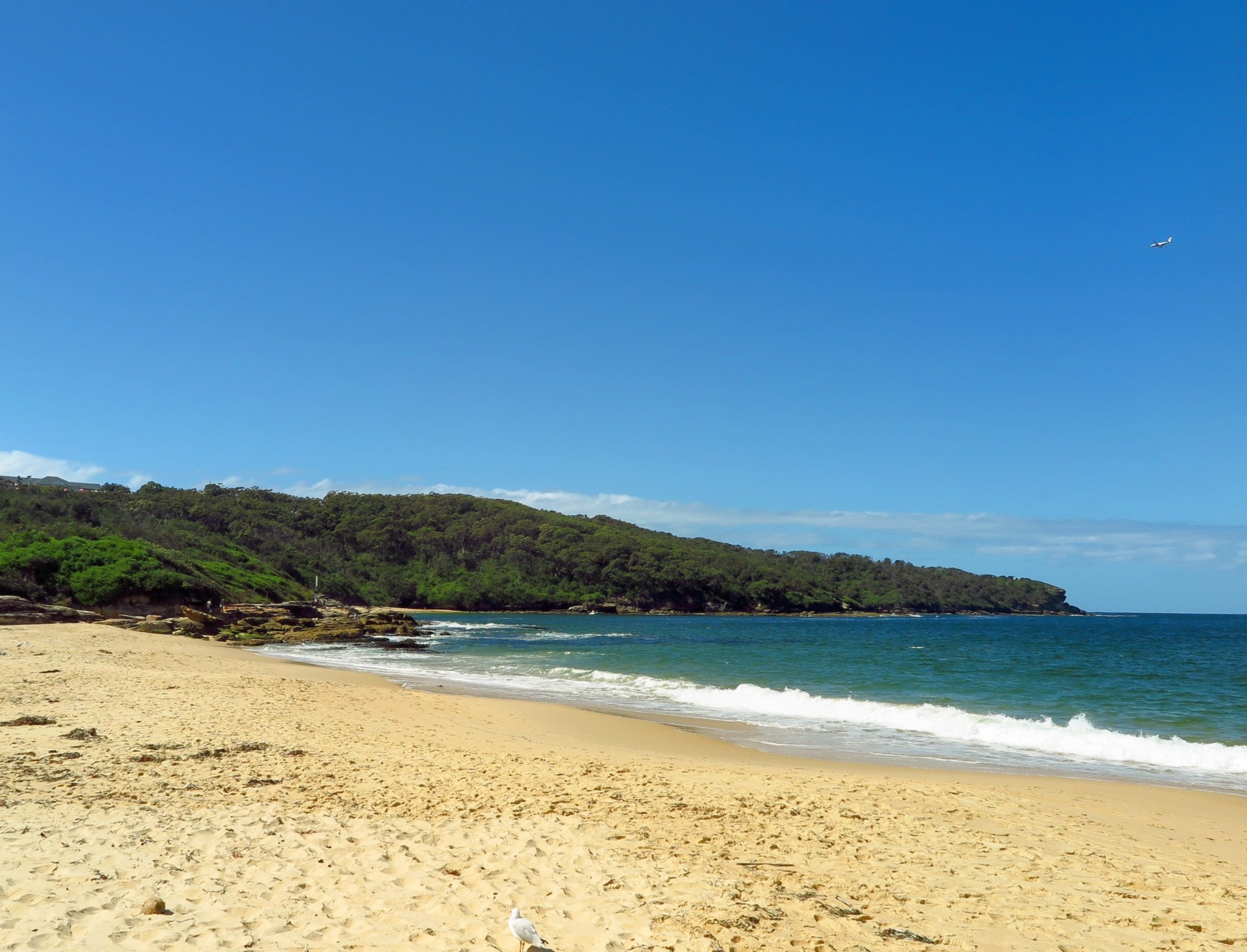
The shoreline at Congwong beach in Sydney. Credit: Georgia Clickner
Following dinner, we practiced setting up our telescopes, maneuvering them to the target star field, and locating the target star in our cameras. We were all amazed to see new constellations, such as the Southern Cross, as well as a few familiar constellations like Orion and Canis Major—but upside down! We would repeat this training process every clear night, troubleshooting problems with the mounts, optical arrays, and cameras; earning ourselves a deeper understanding of the quirks of each telescope with every passing day.
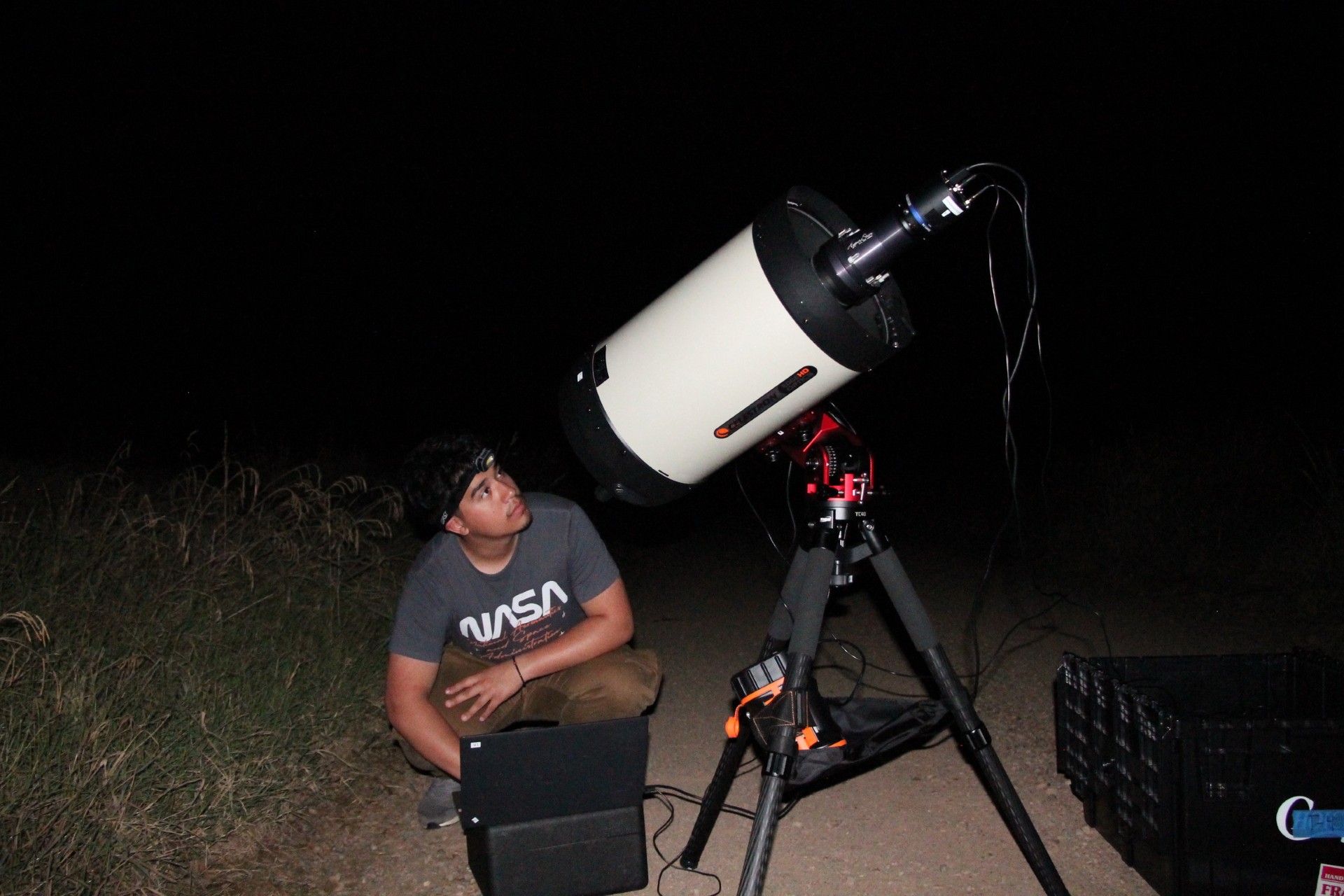
Occultation Group observer Diego Gomez operating a Celestron 11” telescope on an ZWO AM5 mount. Credit: Phillip Oakey
The following day, we had some free time! The third and fourth years drove off to study at a cafe while the rest of us took a trip into Sydney. We spent hours walking along charming streets and appreciating the abundance of green spaces the city had to offer. We even got to see the Sydney Opera House, which rose from the waters like the pearly sails of a ship.
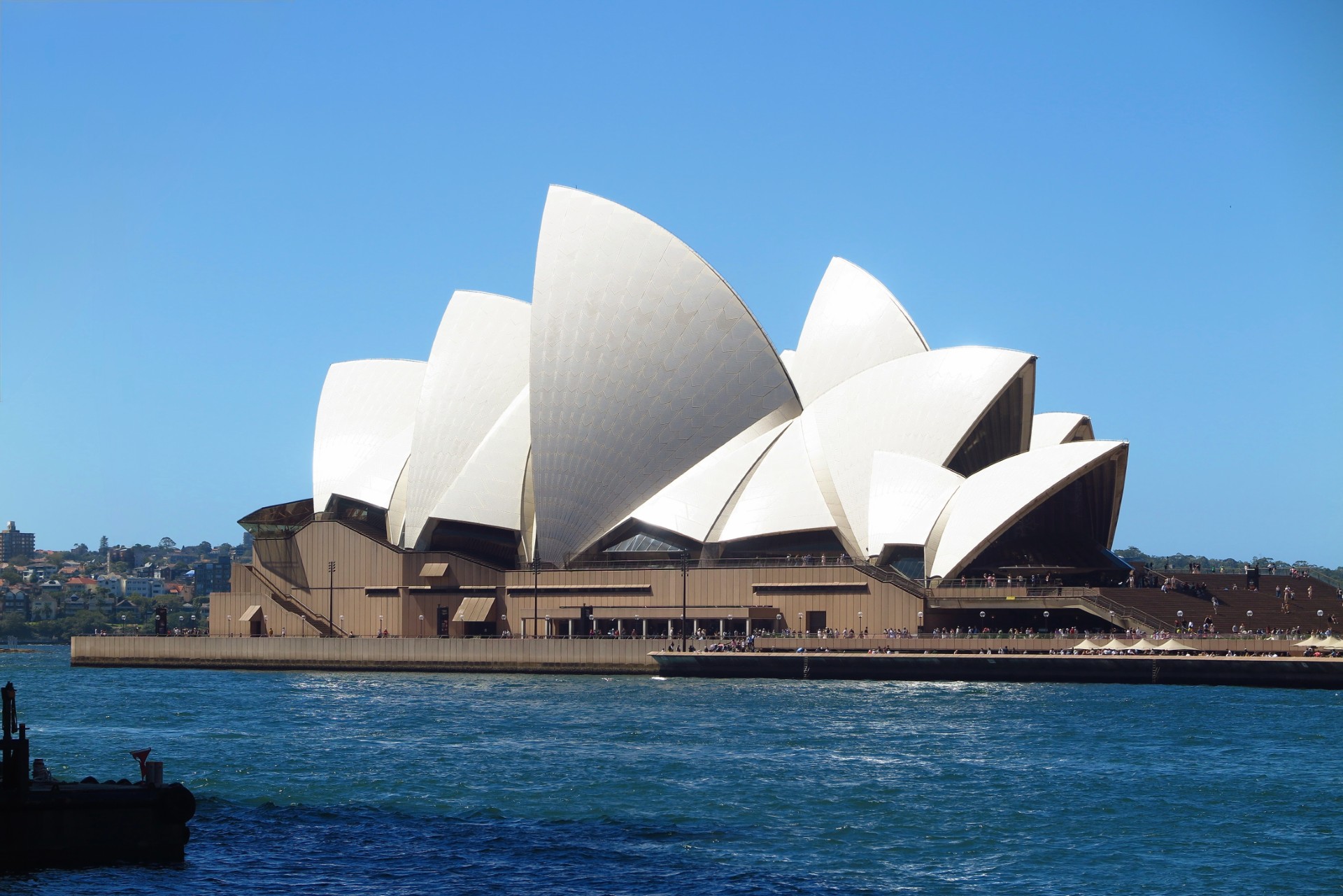
The Sydney Opera house, as viewed from across the harbor. Credit: Georgia Clickner
Between sightseeing, homework, and training, our time in Sydney passed quickly, and soon we were on our way to our next destination, which would lie along the shadow path. We drove five hours inland to a small town in the Australian savanna, named Dubbo. This is where we hoped to base our operations. Any occultation has a selection of locations from which it can be seen from (see map below!), similar to how eclipses can be seen along a “path of totality”. We selected Dubbo as an ideal central location to base out of, since its location would allow us to either push farther inland or back to the coast to avoid cloud cover.
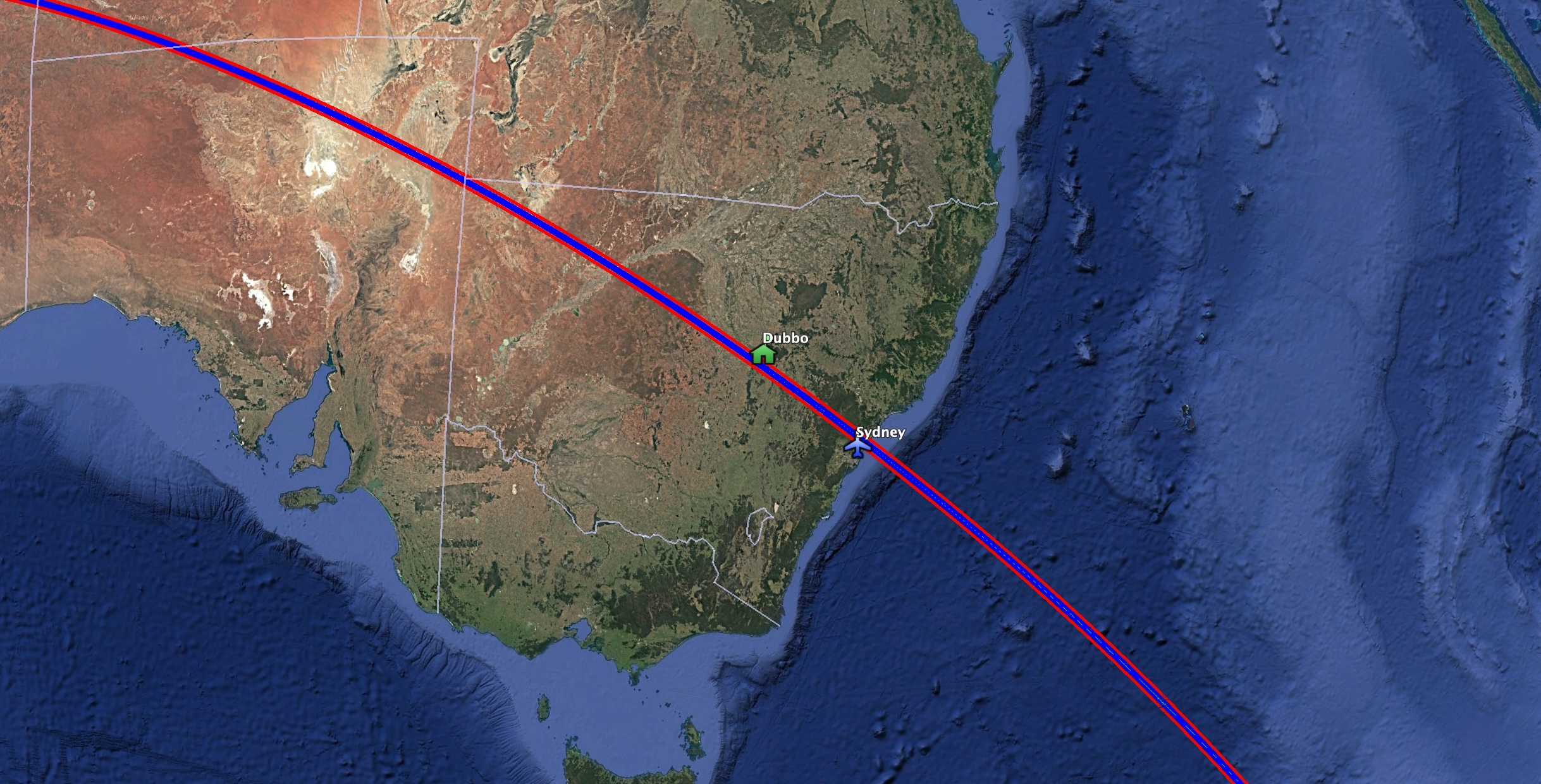
A map of the potential locations across Australia from which Kallichore can be observed. Credit: Google Earth
On our roadtrip, we entertained ourselves with intensely competitive alphabet games. We enjoyed watching the landscape change from subtropical greenery, to craggy mountains, then to rolling green hills, and finally to the grassy savanna.
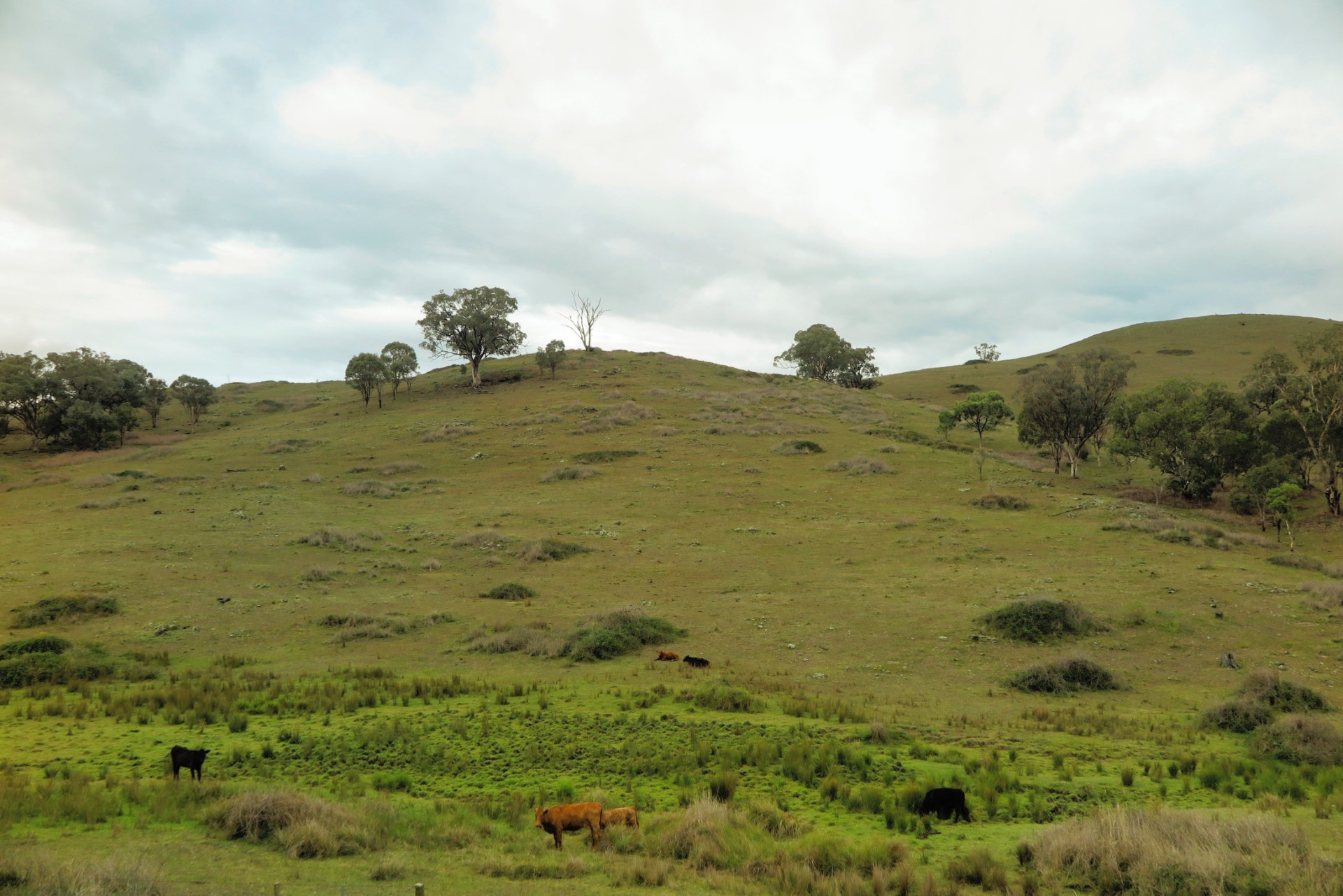
Cows strolling across green hills. Credit: Georgia Clickner
We found Dubbo to be a wonderful little town, with friendly locals, a nice zoo, and its own observatory! We had reached out ahead of time to collaborate with them, since as luck would have it, Dubbo Observatory was located directly under the shadow path. We provided our cameras and timing equipment to the operator of the observatory, and attached them to a very nice seventeen-inch PlaneWave telescope.
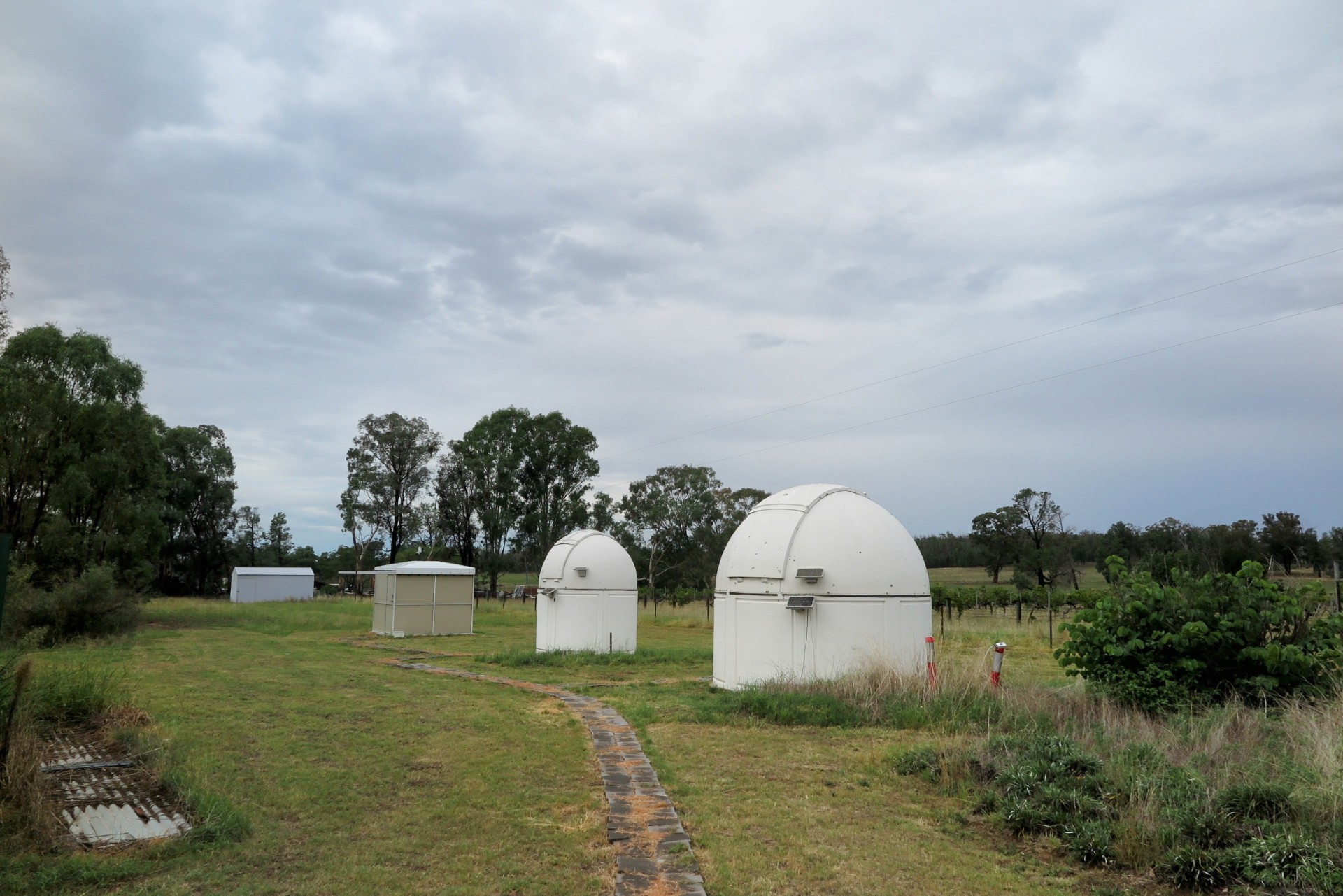
Small domes storing telescopes outside the Dubbo Observatory. Credit: Georgia Clickner
On the days leading up to the occultation, tension started to rise. As we watched the weather forecast, clouds expanded across the entire country. At one point, we were prepared to drive a whole day’s trip inland in search of clear skies, but recent rains had washed out many of the country roads which we would have used to reach observing sites in central Australia. As the forecast developed, it would become clear that we would have ill luck across most of southern Australia. We communicated with the other teams participating in this observation to distribute ourselves across the shadow path, spaced from one another by approximately 100 kilometers each, so that there might be a chance that one of our teams would catch a break in the clouds. Our eight observers spent the afternoon scouting on Google Earth, as real-time satellite imagery would inform us on where small pockets of clouds might appear. We ended up selecting over eighty potential sites to observe from across the state of New South Wales.
On March 18th, 2026, the night of the event, all four teams from UVA set up at different locations in the Dubbo area. My teammate and I were dropped off on a small dirt road in the grasslands, and set up our telescope under ominous, dark grey clouds, watching as lightning threatened in the distance. About half an hour out from the event, rain drops began to fall. After debating for a few minutes, we reluctantly but confidently made the call to take down our equipment, worried about the damage rain could inflict upon the electronics. We worked quickly, throwing our jackets over the mount, battery, and laptop to protect them from water.
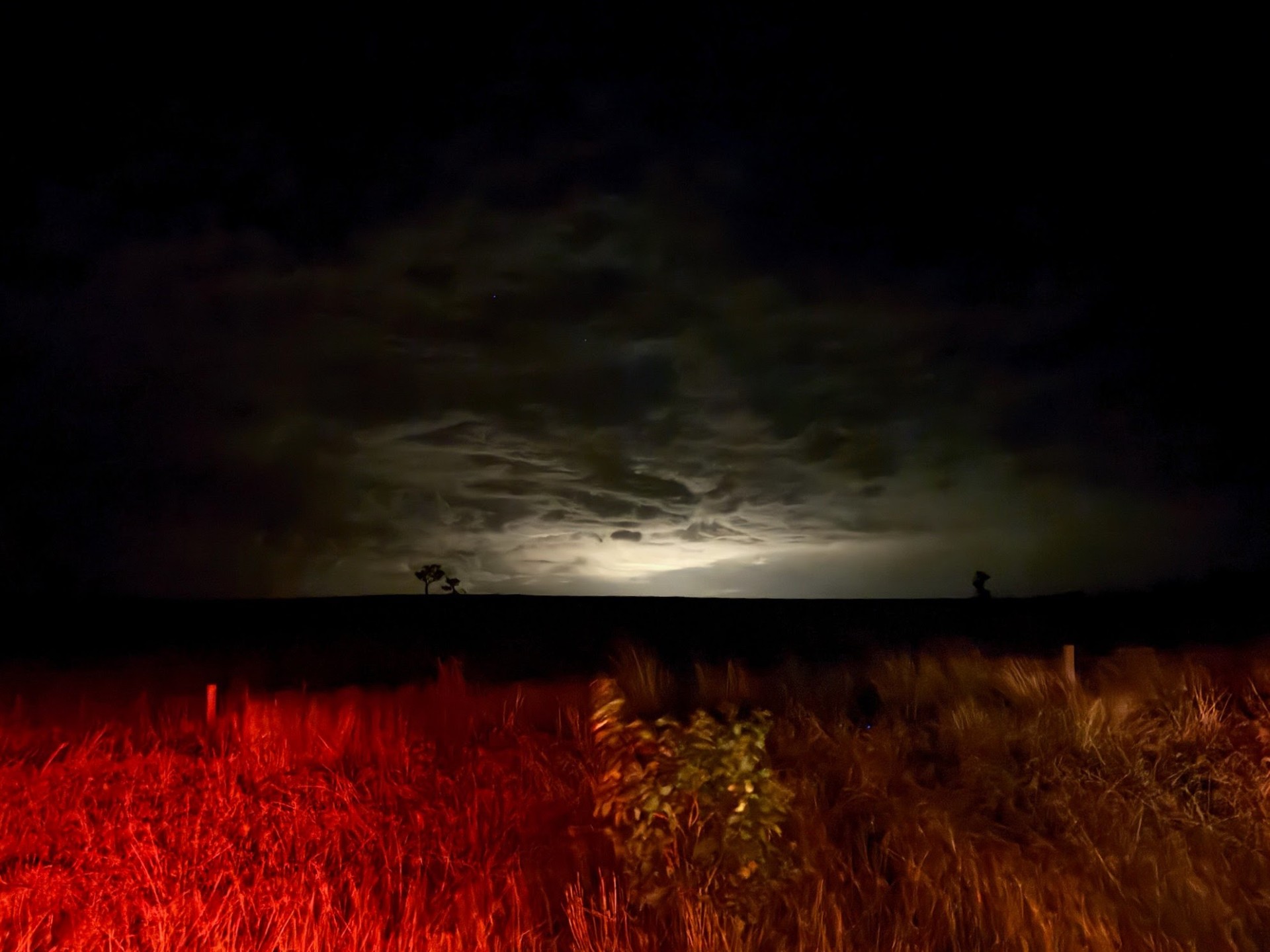
Ominous clouds the night of the event, as viewed from one of our sites. Credit: Colin Surovell
Unfortunately, all of our teammates faced the same weather issues and we returned frustrated, yet proud of our efforts. Though we were all a little downtrodden, we also acknowledged that this was the way scientific research often goes. If we could control the weather, we would, but experiences like these are what make successful expeditions all the more sweet! As it turned out, we would have had to travel to the opposite coast of Australia, over two thousand kilometers away, in order to catch clear skies.
The following day, we packed up and returned to Sydney. As I sat in the car on the way back, I reflected on the trip. I was surrounded by people who, many of whom had started off as teammates or friendly acquaintances, but now had grown to be some of my closest friends.
The following day we all went out for a delicious water-side brunch together. This was our last full day in Australia and we decided to make the most of it. Following brunch, I went with a few others on a hike in the Royal National Park. Throughout the hike, we traced the edge of a cliff, looking down into the deep sapphire waters of the pacific. The path was surrounded by a dense carpet of subtropical brush, reaching as far as the eye could see. As we progressed along the path, we were met by views of shimmering waterfalls which ran down the sides of the cliff, interrupted by misty rainbows. Humongous waves crashed against craggy rocks and the ocean seemed to disappear into the blue sky. This was by far one of the most beautiful places I’d ever been!
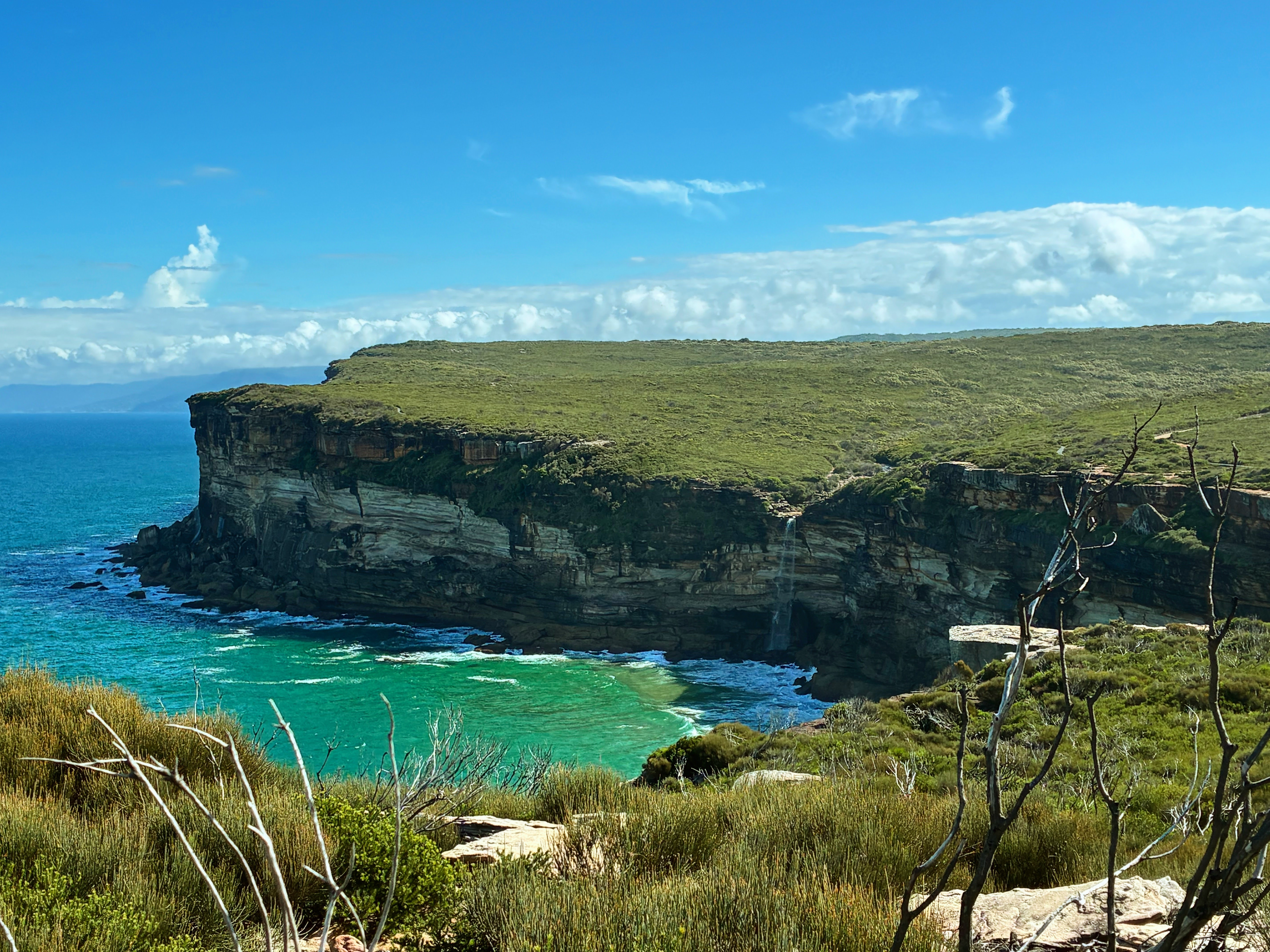
The coast of Royal National Park. Credit: Georgia Clickner
As I flew back to Charlottesville the next day, I thought over the experiences we’d had again. I’m so incredibly grateful to have had the privilege to have been able to take part in this mission. I comforted myself with the knowledge that in all of our efforts, we were successful. If not for the weather, we would have come home with exactly what we came for.
The Occultation Group at the University of Virginia would like to gratefully acknowledge support for this expedition from the Instituto Astrofísica de Andalucía, the European Space Agency, the Jefferson Trust, and the UVA Parents Program/Student Council. Your contributions have made all of our works possible, and we are incredibly grateful.
Georgia Clickner
Editor, Class of 2029