 The Occultation Group at UVA
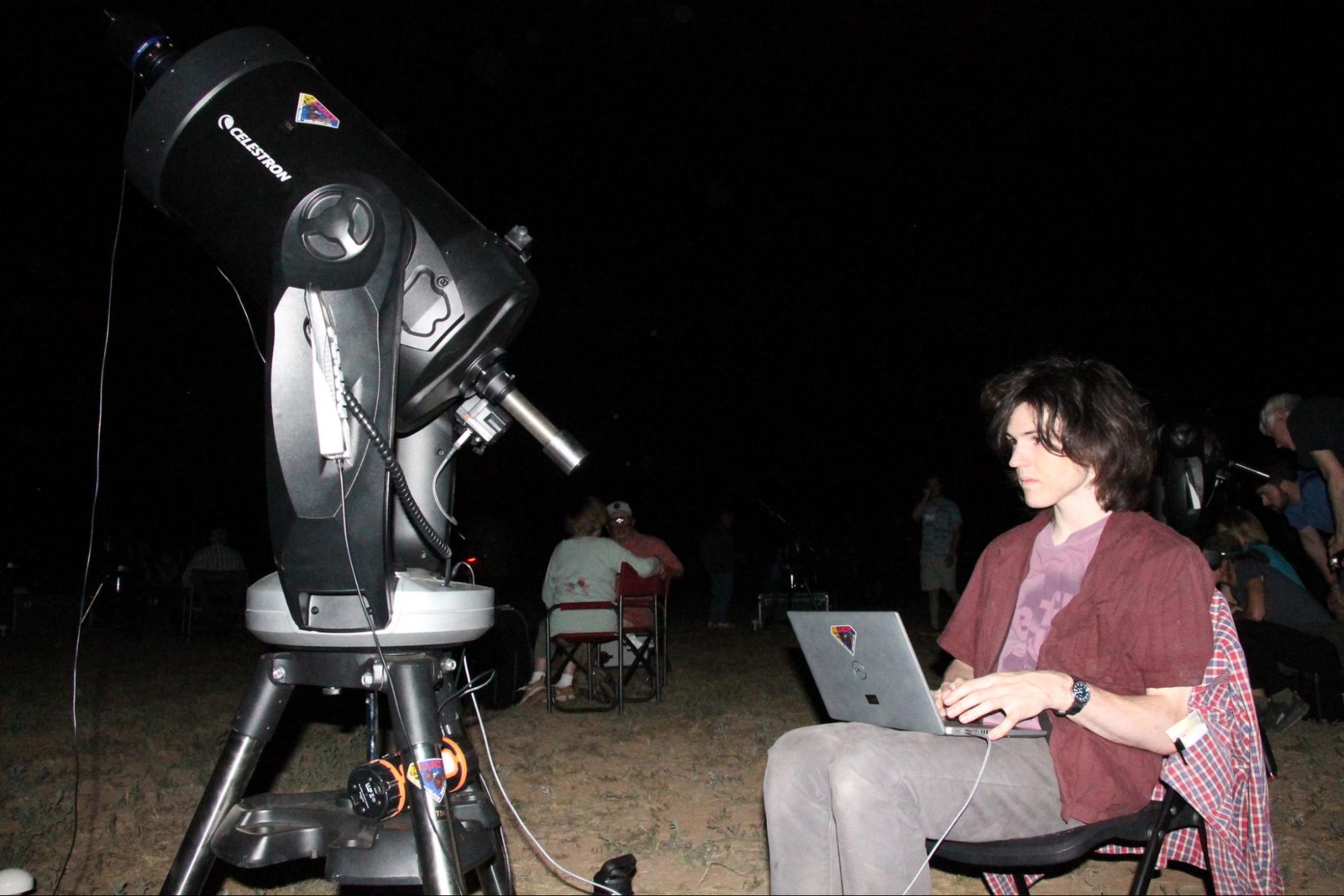
Occultation Group observer Colin Surovell operating a CPC1100 telescope. Credit: Phillip 'Teddy' Oakey
On July 17th, 2026, eight Occultation Group members took time out of their summer plans to rendezvous in Longmont, Colorado for the annual International Occultation Timing Association (IOTA) conference. This year’s event was a joint session with the Research and Education Collaborative Occultation Network (RECON), another organization which chases occultations on the American west coast. More information about IOTA and RECON can be found on their respective websites.
Observers from Virginia flew into Denver throughout the morning, afternoon, and evening, with many having started the day hours before dawn. After finally escaping the airport with our first six members in a rental car, we went out for pho and boba and caught up with each other, talking about our summer research, travels, and general misadventures so far. With stomachs and curiosities sated, we started the journey to Longmont. As we drove through the Colorado backroads, we noticed how flat, empty, and devoid of light pollution the landscape was –all admirable qualities for occulting. My personal goal for the past few years has been to see the band of the Milky Way with my own unaided eyes, and having been thwarted in all my previous attempts by moonlight, haze, or weather, I was feeling optimistic about the skies out west.
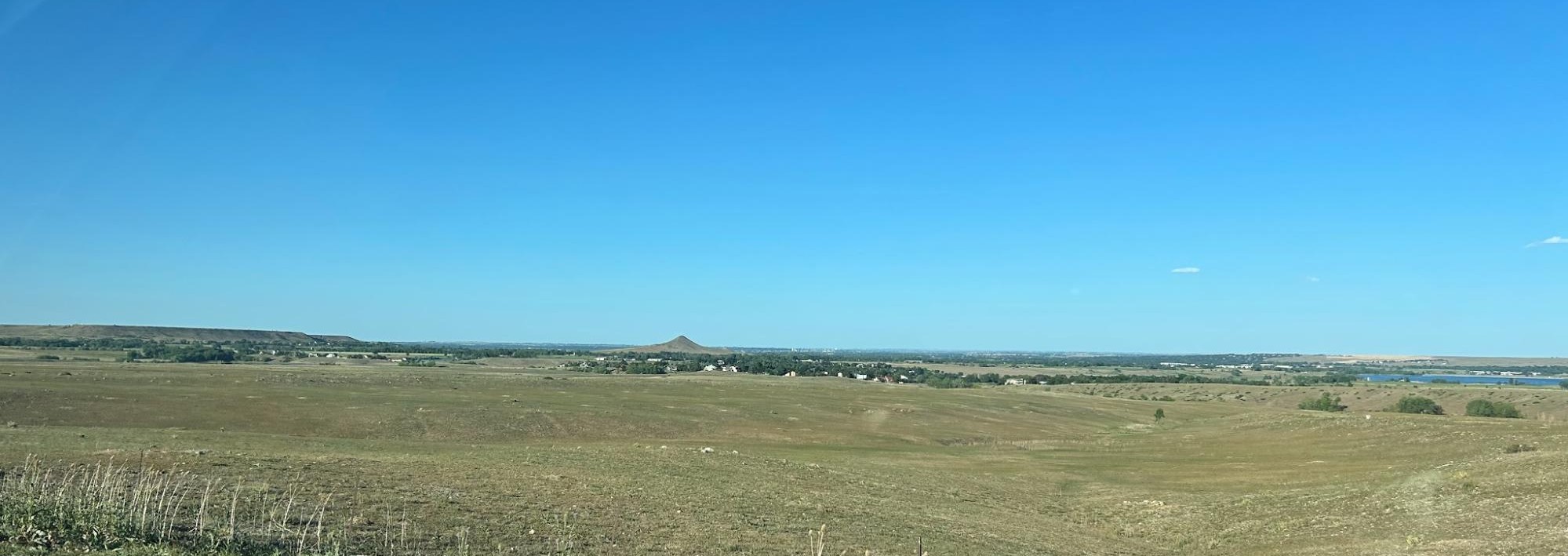
The flat landscape between Boulder and Longmont, CO. Credit: Casey York
Upon arriving at the hotel, we all nearly collapsed from exhaustion; we watched Nope, a very aptly themed Jordan Peele movie involving a carnivorous alien entity terrorizing a small rural town, which was eerily similar to many we had just traveled through. I then hopped back into the shotgun seat as Keya Garg’s designated passenger/DJ/person-who-keeps-the-driver-awake while collecting Andrey Moore from the airport. We arrived back at the hotel without any alien encounters, and finally got to sleep after around twenty-four hours of travel-related chaos.
The conference took place over the next two days, the 18th and 19th, and was split into parallel sessions at two neighboring hotels, offering us the luxury of choice in the presentations we wished to see. Both of these days were followed by a few hours of our own exploration and dinners with other conference participants. Marc Buie, who helps organize occultation campaigns all around the world (see his substack), and has collaborated with the Occultation Group on multiple previous occasions, hosted these at his residence in Longmont. The main purpose of these dinners was to prepare to occult a main belt asteroid, (5232) Jordaens, which was recently discovered to be two bodies in orbit around each other–a binary system (link). The event, at 10:29 p.m. MDT on the 20th, was shaping up to have very questionable weather, which everyone was hoping would dissipate, but all we could do was wait, prepare, and enjoy the conference itself.
The first day started off strong as we got to know other attendees and familiarized ourselves with each other’s experiences in the field. Between the forty to fifty in-person attendees, there were hundreds of years of occulting experience. We students were on one end of the spectrum, with between one and four years of occulting each, roughly corresponding to our time at the university, but on the other end were veterans like David and Joan Dunham, who practically founded the field and were involved in some of the first large campaigns to observe asteroid occultation in the 1950s.
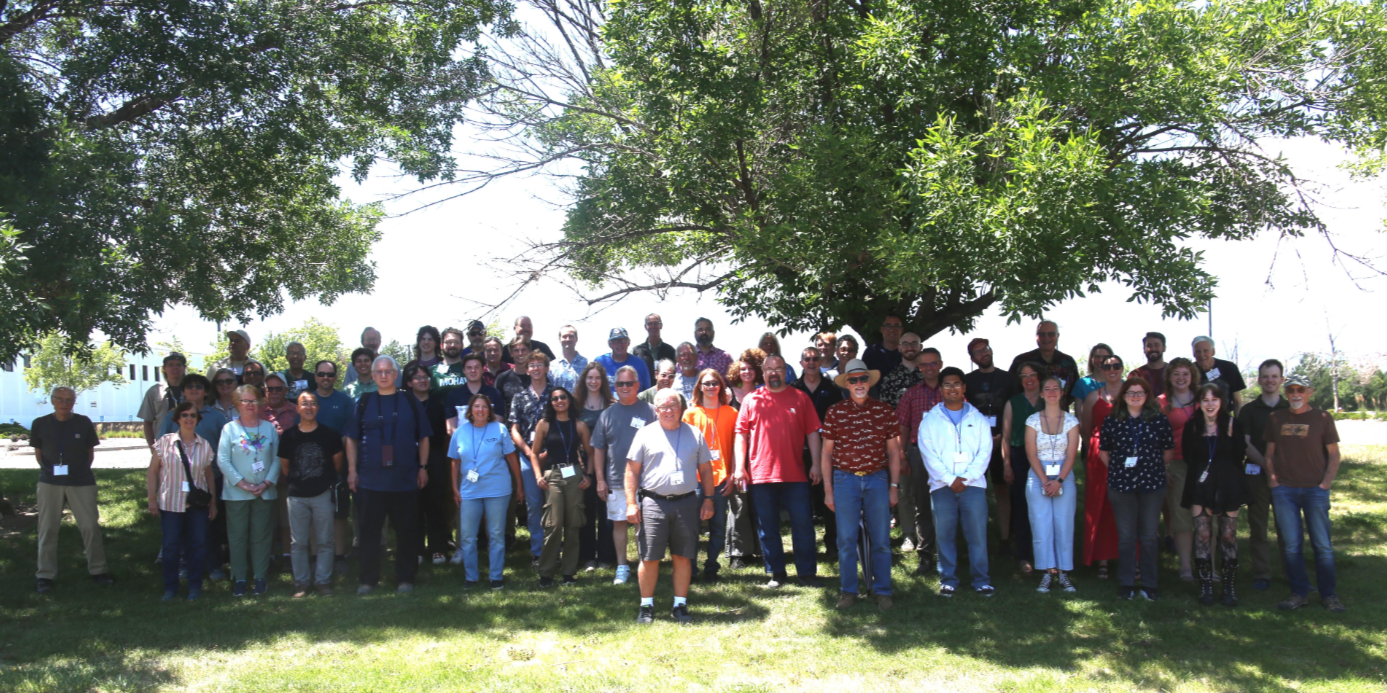
Group picture of all in-person attendees of the 2026 IOTA/RECON joint conference. Credit: John Keller
The first day’s topics connected us to the wider world of occultation science, introducing us to Buie’s data repository and IOTAHub, a database containing information about occultations submitted by IOTA members, including some campaigns involving UVA observers. There was also a presentation on interesting occultations in the future, which we watched with great interest to look for potential campaign targets. The target showing the most promise for us at UVA is (6990) Toya, a main-belt asteroid that’s projected to cast a shadow near Richmond on August 27th, 2026. The presentation also covered potentially hazardous asteroids (PHAs), which some people were very interested to try to observe in the future.
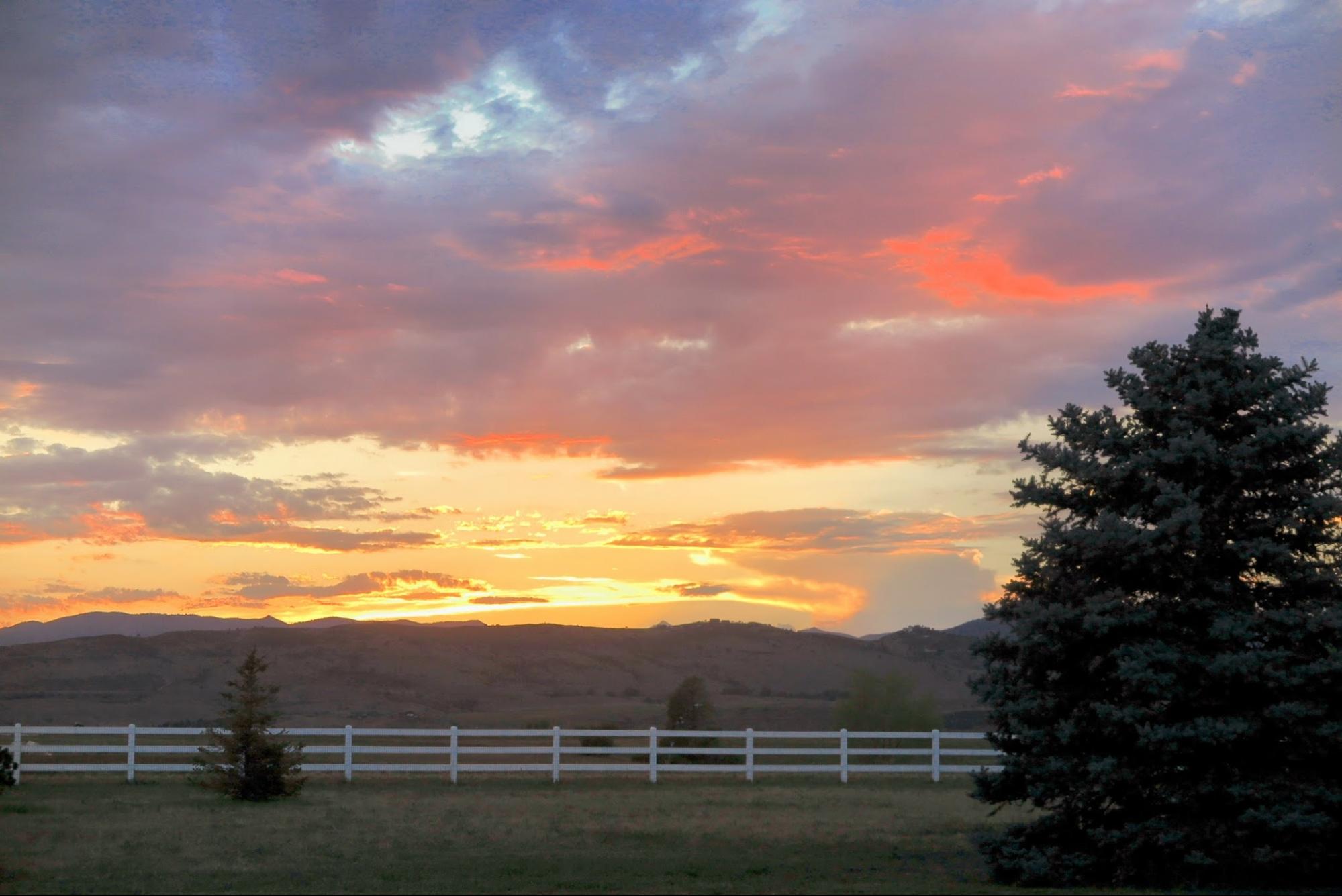
The sunset as viewed from our training site in Longmont, CO. Credit: Georgia Clickner
Following the first day of presentations, the Virginian observers decided to drive to Boulder’s outdoor mall on Pearl Street, where we got ice cream and visited a retro arcade/candy shop. After failing miserably at pinball, Galaga, and classic Mario, we carpool-karaoke-ed our way back to Longmont, arriving at our hub for the first of two training nights. While most of us were paired with one IOTA/RECON member or tasked with manning a telescope alone, I found myself paired with three experienced occultists: Hugh Davidson, a Colorado local with occulting experience since 2018; Ted Blank, an IOTA member and retired IT professional whose first occultation was in 2010; and Joan Dunham, treasurer of IOTA, who has been occulting since long before the turn of the century. While these three had extensive occultation experience in general, I had most recently worked with the CPC1100 telescope to be used for the event and thus found myself in the hot seat. Luckily, their insights were very helpful and our setup and test data collection went off without a hitch.
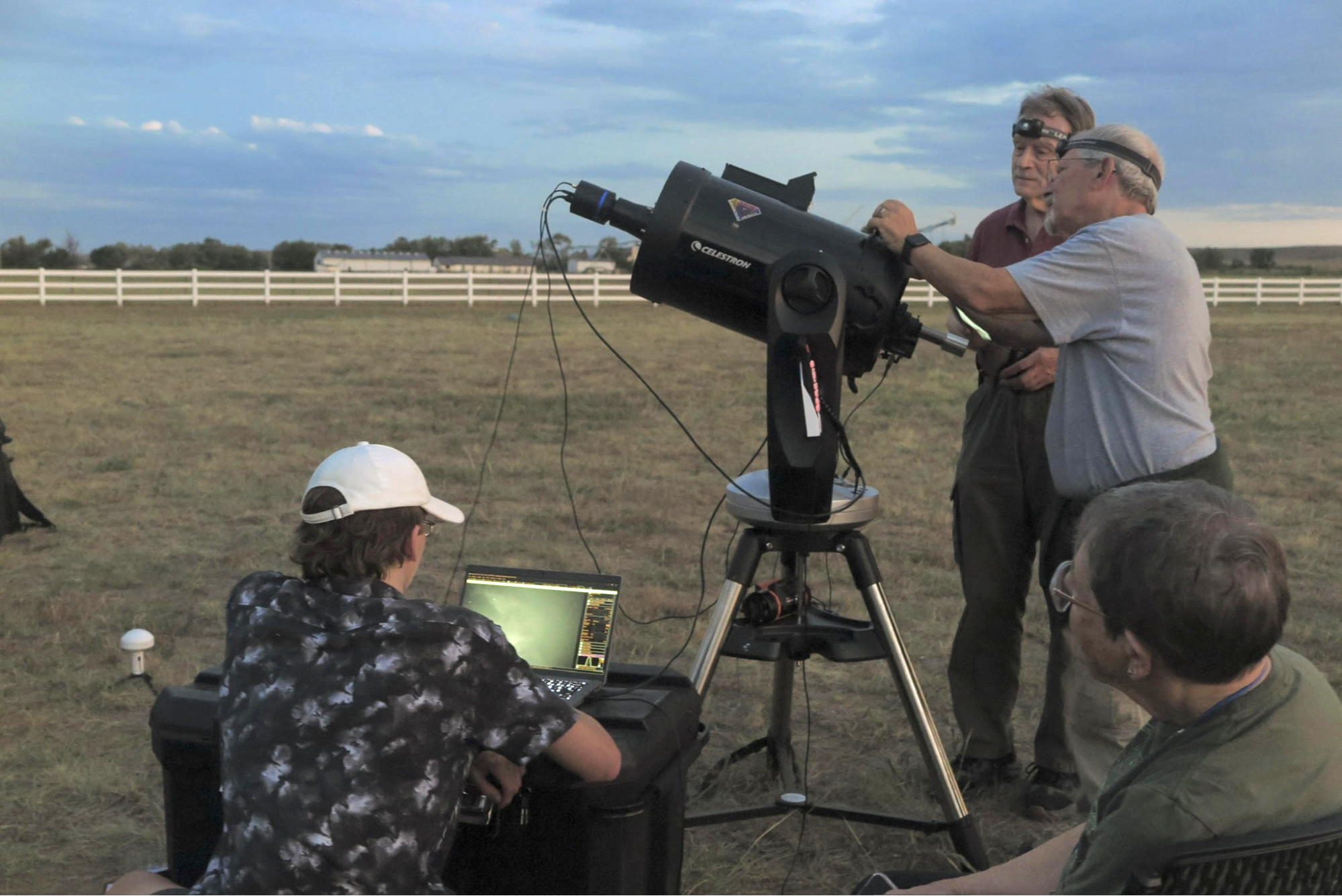
The team of “occultists” assigned to chord R20. From left to right: Casey York, Hugh Davidson, Ted Blank, Joan Dunham. Credit: Georgia Clickner
While everybody was packing up their telescopes for the night, we finally got our chance to see the faint band of our galaxy. This was the best sustained view I’d ever seen of it, but it was still captured much better by our cameras. By the time we arrived back at our clown car of a hotel room, it was well past midnight, but none of us wanted the night to end. Eventually, at Keya’s very exasperated behest, we reluctantly stopped talking and slept.
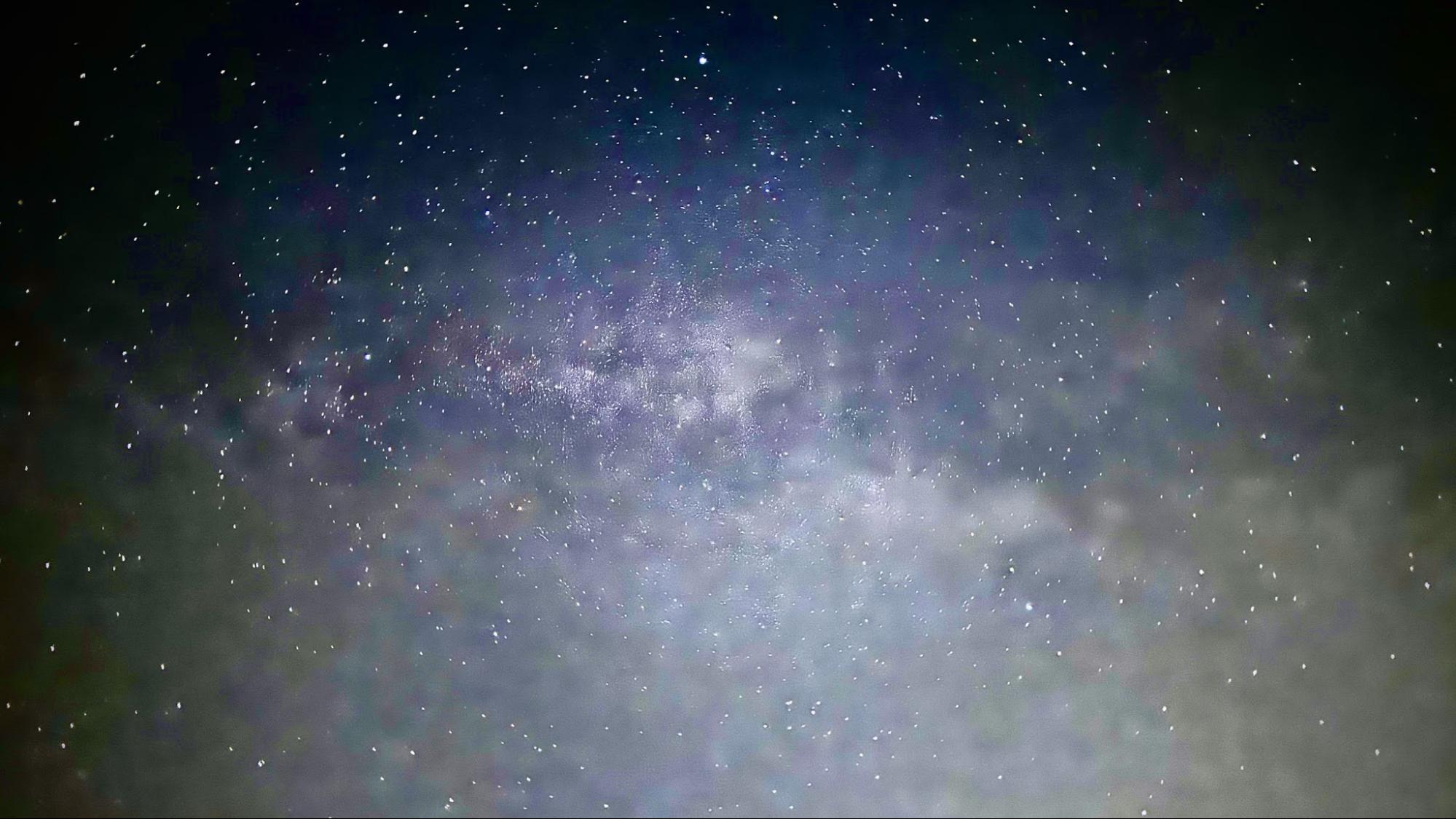
The central band of the Milky Way. Credit: Mason Strak
Day two started with teams working together to analyze the data they collected the previous night. I needed a little refresher, since the last time I did data analysis in a meaningful way was during our January 2026 expedition to occult (269) Justitia in the United Arab Emirates, but quickly regained my footing and hovered around the room to help other teams with their analysis. Following this and a quick lunch, we got to see Phillip “Teddy” Oakey, our very own former president, make an impassioned presentation about our group’s findings over the past four years and why our work is so important.
Following the second day’s presentations, we were invited by Dr. Eliot Young of the Southwest Research Institute (SwRI) to take a short hike alongside the Flatirons. During this hike he provided more information about our group’s next international expedition, which will be to Argentina to observe an occultation by Titan, the largest moon of Saturn. I will be lucky enough to represent the Occultation Group at the University of Virginia in this expedition! Rather than the fifteen-minute-long occultation, our main focus will actually be a “central flash” right in the middle of the occultation, where the atmosphere of Titan will focus all of the starlight into the center of the shadow path and actually result in an increase in brightness. The asymmetries in this flash as viewed from different chords can paint a picture of the wind speeds and weather patterns on Titan. I’m thrilled to be a part of this expedition and very excited to see what we’ll find.
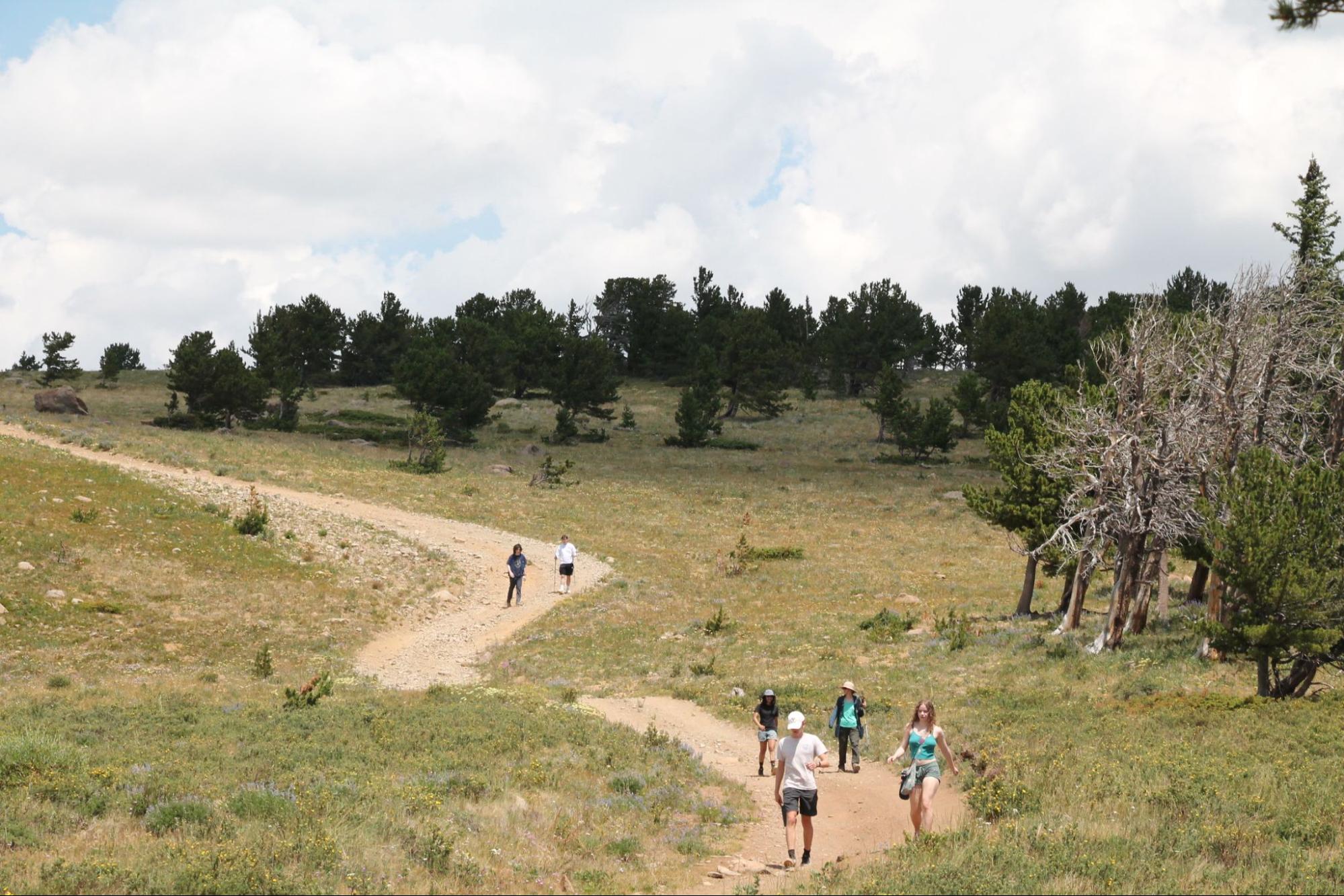
Occultation Group members enjoying a hike. Credit: Phillip Oakey
Our second day of setup was as informative as it was frustrating. We assembled the telescope much more smoothly than the previous day, but shortly after setting up the scope and getting on field, our external 12V battery, which was responsible for powering everything related to the scope, died. This was very concerning, since the battery had been fully charged the night before. Buie was thankfully able to provide a replacement battery which we ultimately used to get our test data that night. In addition to data on the field where the occultation would take place, we also gathered data on GPS satellites in a given field to resolve slight timing inconsistencies between the telescopes. With the data taken and the telescope disassembled, we loaded the telescope pieces into Hugh’s and Ted’s cars to prepare for deployment the next day, then returned to the hotel.
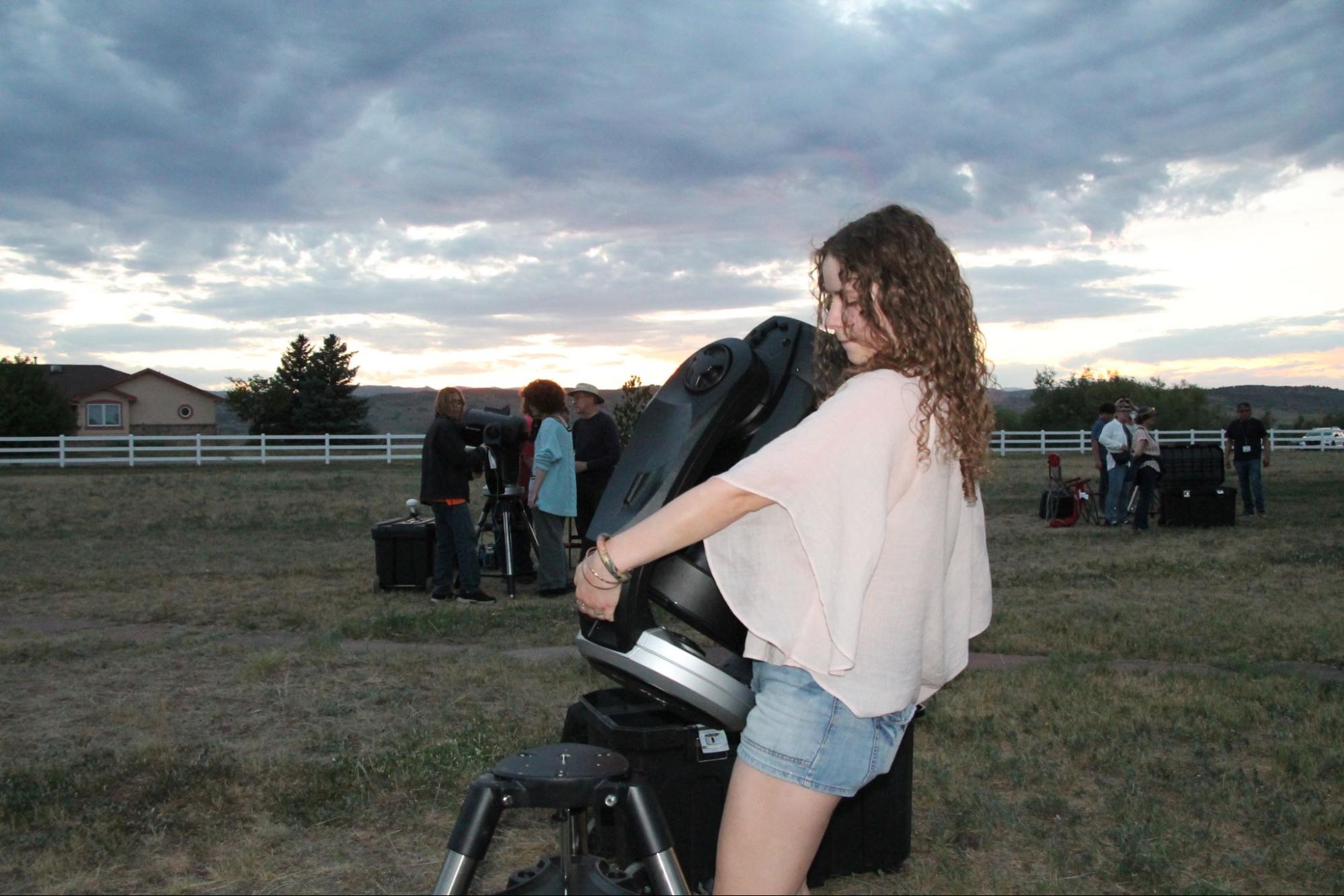
UVA Occultist Georgia Clickner setting up her 11 inch Celestron telescope with CPC mount during a training session. Credit: Phillip Oakey
The morning of event day, our final full day in Colorado, UVA professors Michael Skrutskie and Anne Verbiscer invited us to hike in the mountains near Nederland. This was a whole new experience for me (having rarely been to mountains outside the Appalachians) which involved two peaks at an elevation of around 10,500 feet, the highest elevation I had ever climbed. The scenery was beautiful and the views felt very rewarding, as we had to complete a couple rock scrambles (which I love). A nearby couple offered to take pictures of Georgia Clickner and myself atop one such scramble. We later found that they had just come from visiting a family member who worked at NASA Langley and had been staying in my hometown of Newport News, VA—it really is a small world!
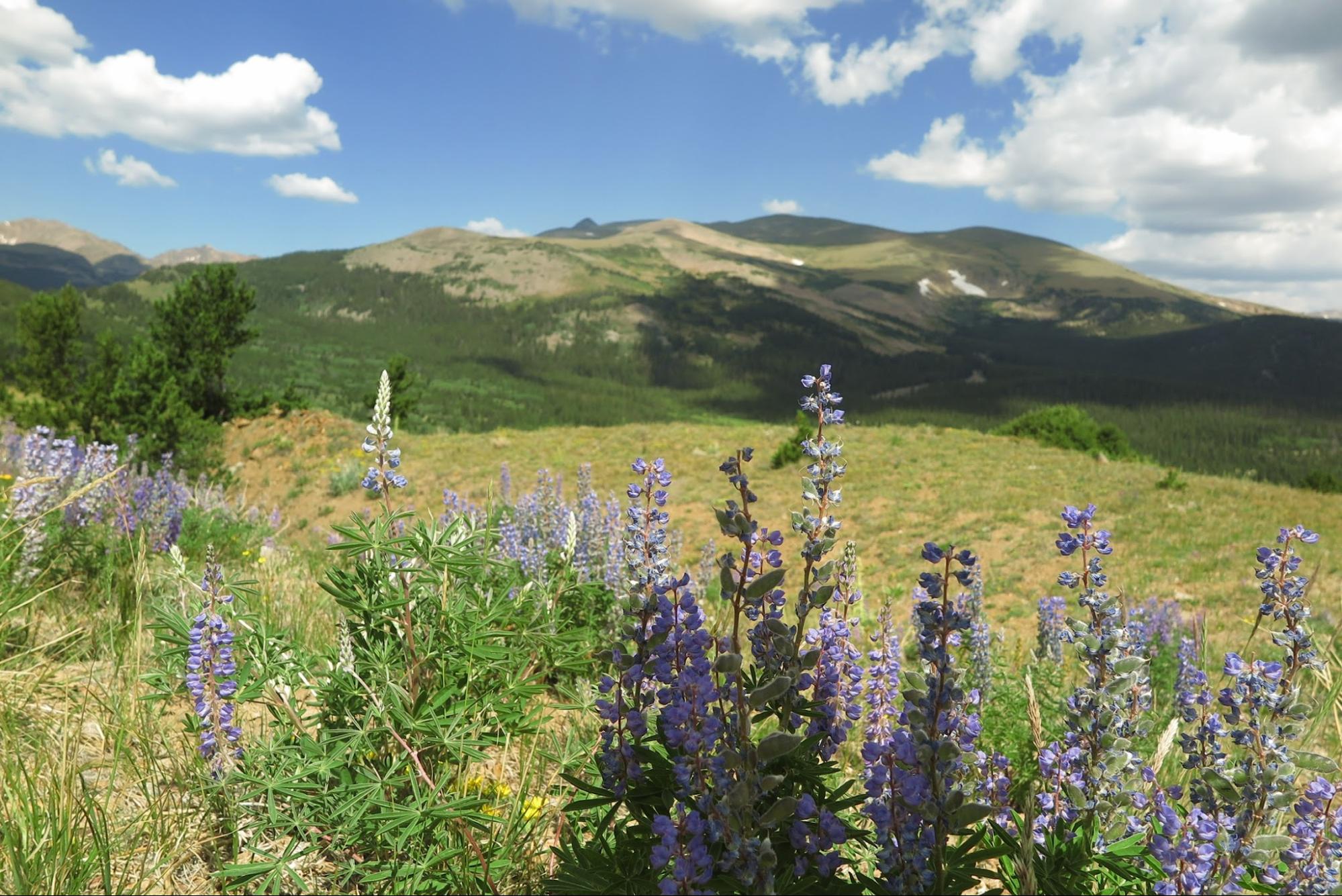
Wildflowers and a mountain view from our event-day hike. Credit: Georgia Clickner
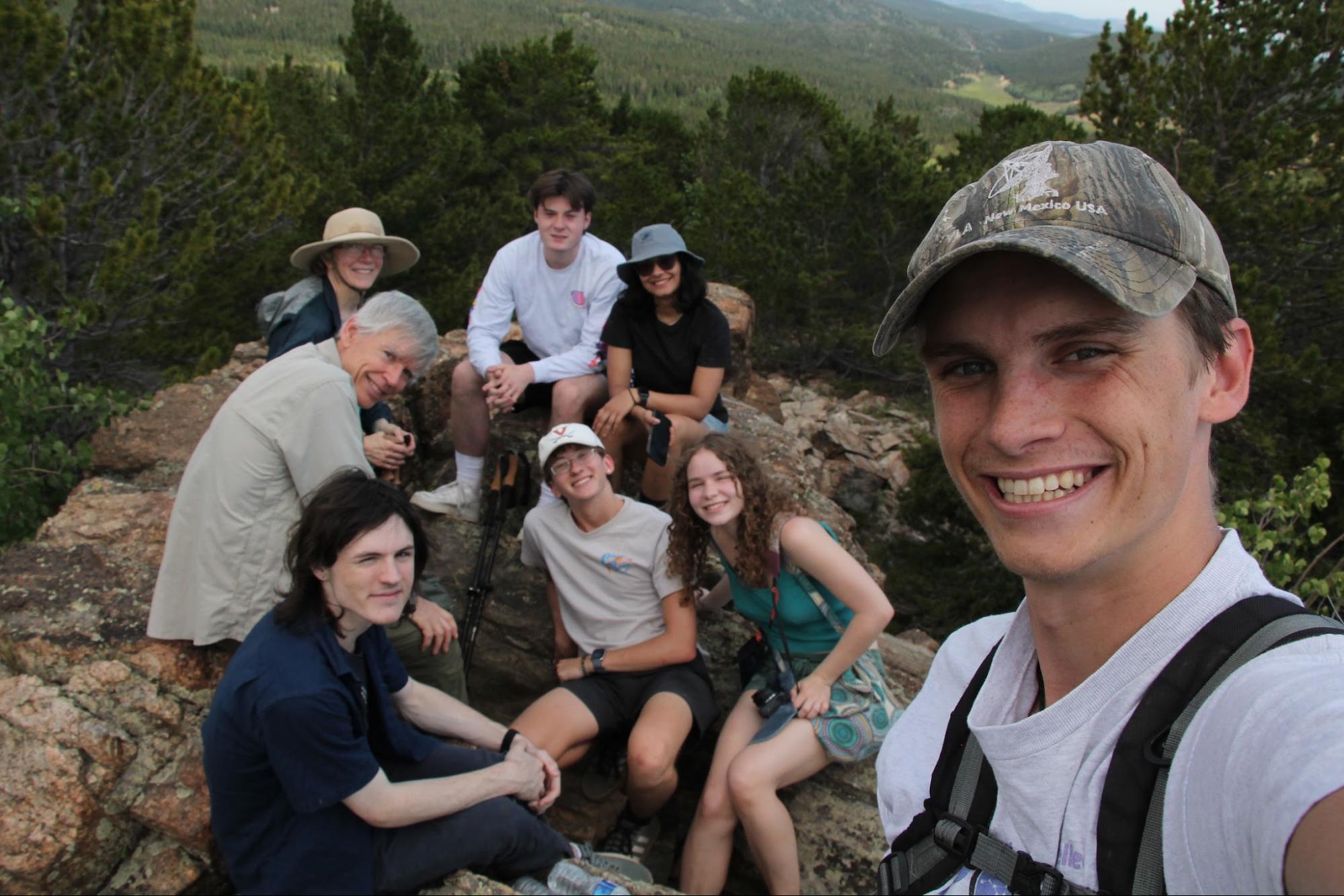
Occultation Group members and professors atop a mountain. From left: (back) Anne Verbiscer, Mason Strak, Keya Garg, (middle), Michael Skrutskie, Casey York, Georgia Clickner, (front) Colin Surovell, Phillip Oakey. Credit: Phillip Oakey
During our morning excursions, we were all getting more and more nervous about the weather for the occultation by Jordeans that evening. It was like a spotty wifi signal: bad enough for us to have to change our plans but just good enough to not lose hope. All of our teams were nervously scouting for sites in the Denver metropolitan area, from Strasburg to Castle Rock.
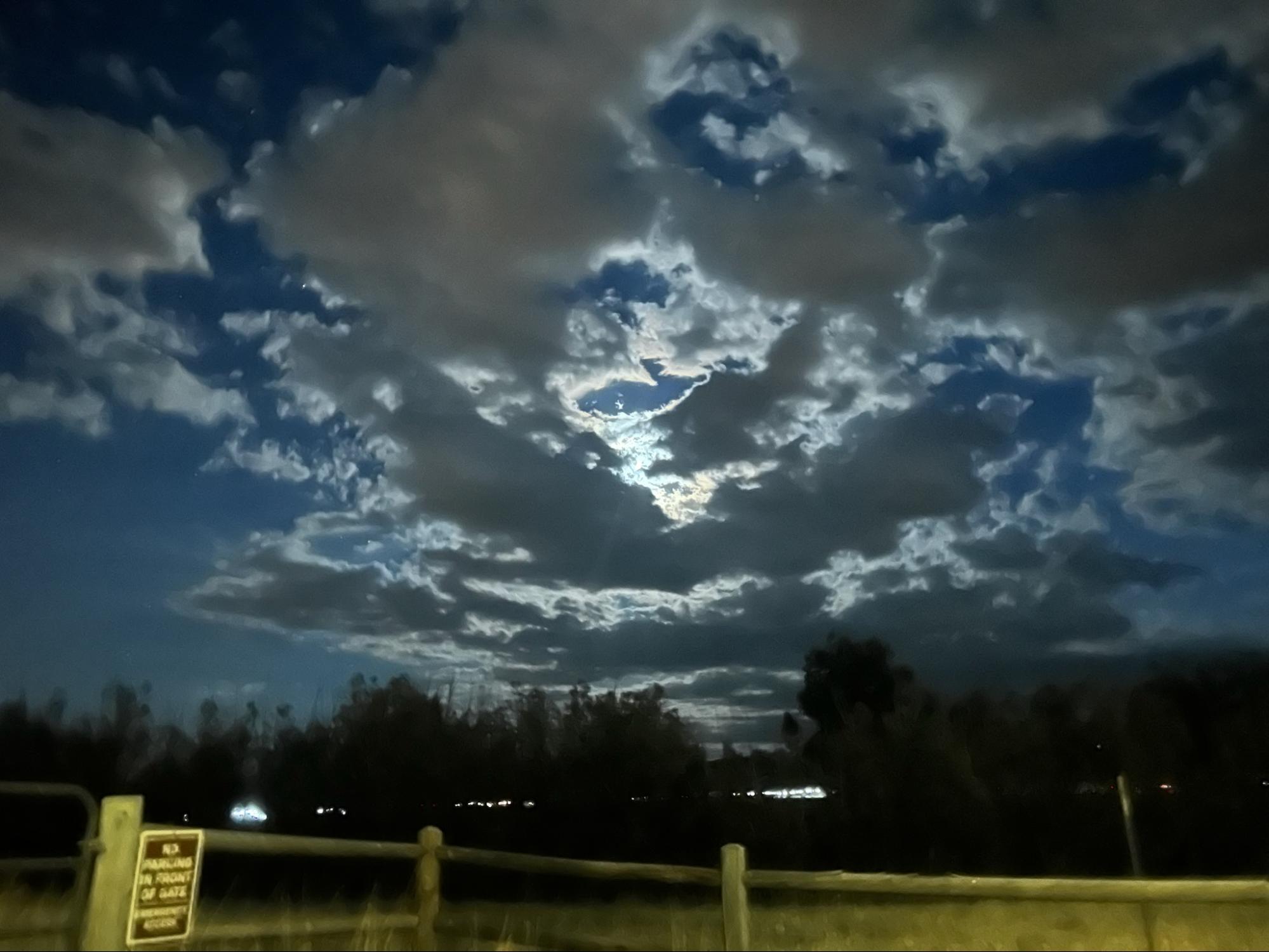
Ominous clouds less than an hour before event time. Credit: Casey York
My team drove for an hour, encountering sun, storms, and a double rainbow (generally a bad omen for occultations) and arrived at a trailhead stemming from a frontage road of I-25, only a mile or so from a Jellystone Park tourist trap. After setting up in a flat area away from unnecessary streetlights, all we could do was watch and wait as wispy clouds drifted across our field. There was one moment where all four of us perked up simultaneously as we smelled petrichor, which is the scent of rain falling on pavement. Fortunately, this scare amounted to nothing and the clouds cleared as we approached event time. We started our six-minute capture and waited with bated breath until we finally observed the blinkout we’d been looking for.
Video of chord R20’s 1.36 second positive. Credit: Casey York
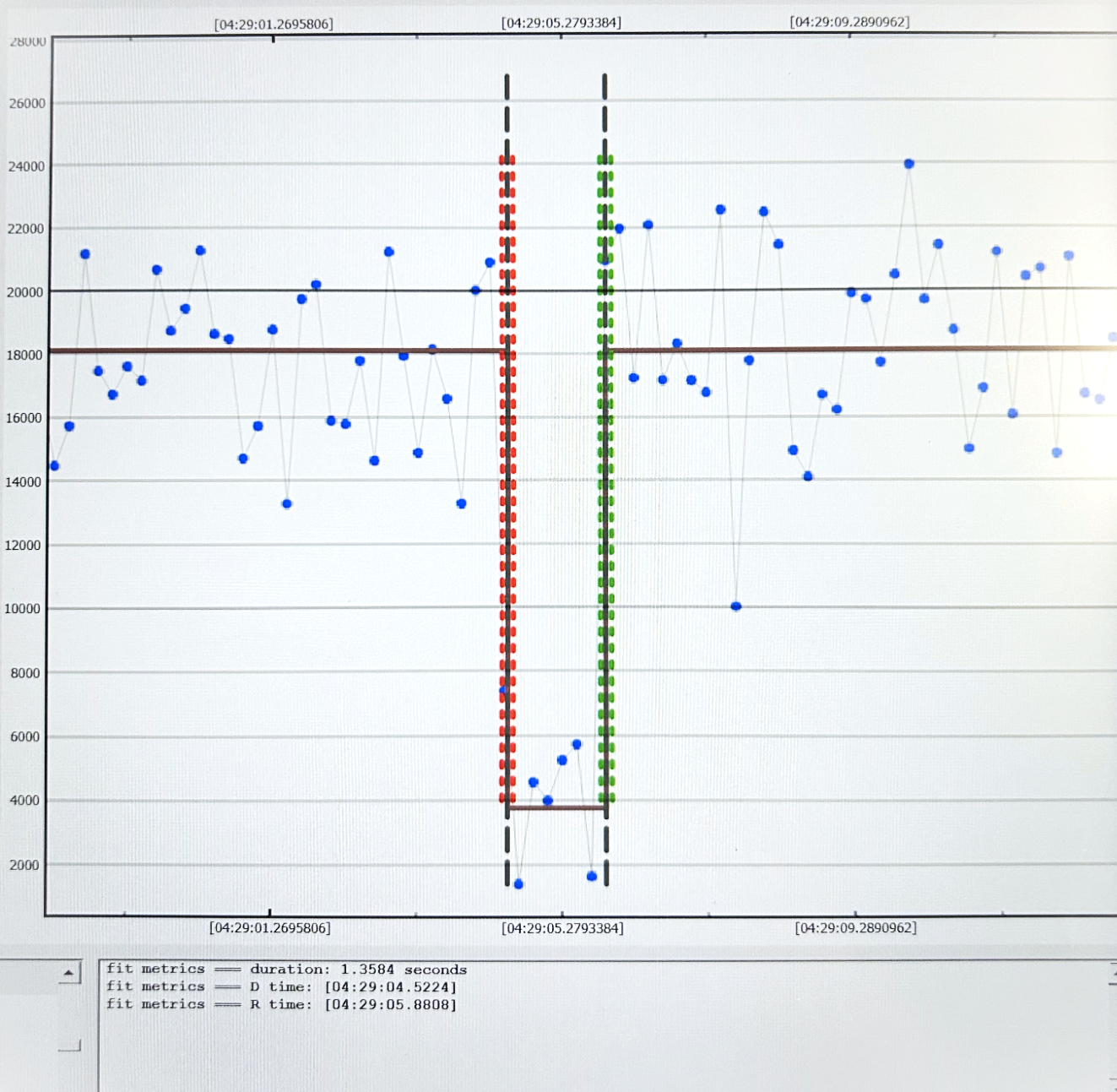
Light curve of chord R20’s 1.36 second positive. Credit: Casey York
After packing up, I was able to do my favorite thing during a campaign: analyze the data in the car on the way home! Andrey also did his analysis immediately—our initial analysis told us that we had observed two different bodies, because our observed occultations took place at enormously different times. As this was my first observation of a binary occultation, this was a very interesting result and it was fascinating that we were able to figure it out so quickly.
With an organized campaign like this, we typically have our “data party” to combine and visualize the results either immediately after or first thing the next day, but many attendees, including us, had early flights to catch the next morning. Despite this, the Virginian observers crowded back into our room and rode the high of the successful deployment into the wee hours of the morning, not wanting our trip to end.
On August 5th, 2026, we had a follow-up Zoom meeting for the data party, in which the final results were revealed. There were six total positives, two of which were from UVA chords (Andrey’s and mine), with three on each body. Unfortunately, based on the deployment pattern, there could have been up to eleven positives, but five were obstructed by weather. Some data we collected, such as the shape and size of the asteroids, were consistent with previous observations, but other data didn’t match as well. A large part of the analysis was determining if the bodies were prolate (egg-shaped) or oblate (pancake-shaped), with evidence from our observations pointing to the latter. However, oblate binary asteroids are supposed to be less likely because of how the Solar System formed, so more data is required to confirm this.
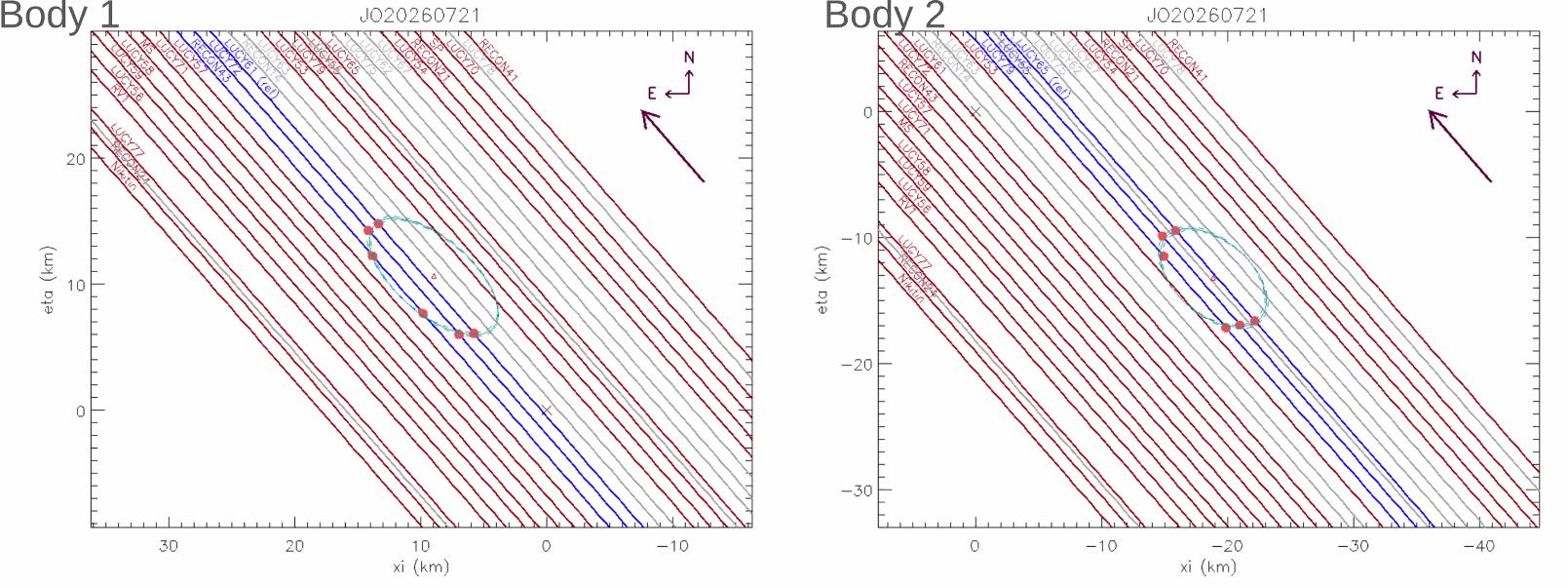
Preliminary profiles for both bodies of 5232 Jordaens from our occultation at 04:29 UTC July 21st, 2026. Credit: Marc Buie
Participating in campaigns like this is always such an amazing experience because we get to meet and learn from others in the occultation community. Whether we get a positive or not, we’re all united in the experience of going out into the field at ungodly hours, competing with weather, light pollution, and our own equipment, and waiting in anticipation for a second-long disappearance of a few pixels on a computer screen. When combined with observations across different observing sites, these minuscule blinkouts outline the shape of a monumental body—as big as a city, country, or even a continent. The feeling of contributing to this process is the perfect balance of exhilarating and educational, and I can’t wait to continue being involved in my remaining years at the University of Virginia.
Casey York
Member, Class of 2029